Viva Las Savings: Inside Nellis Auction’s 450-Bin Daily Rotation in Las Vegas
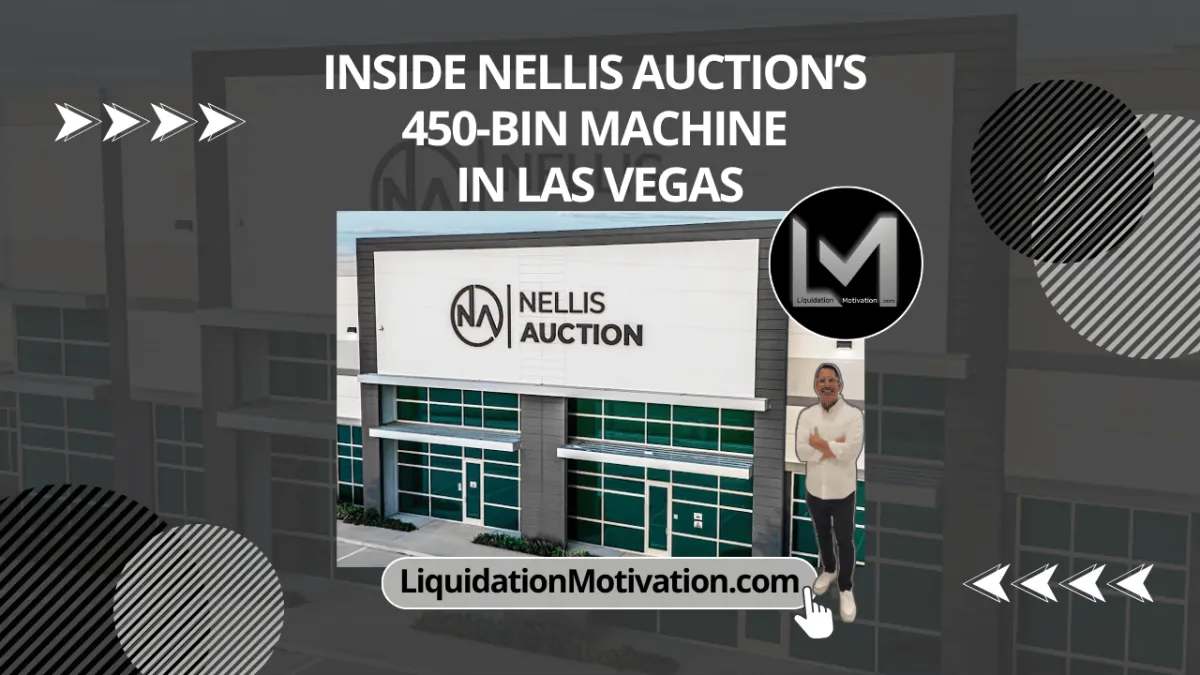
Viva Las Savings! Inside Nellis Auction’s 450-Bin Machine in Las Vegas
Guys—Vegas did it again. We rolled into Meadows Mall, and boom: 450 bins, wall-to-wall treasure. Nellis Auction Outlet isn’t just big—it’s a machine. Three color-coded zones, fresh loads every single day, lines out the door on a Monday at 4:30 PM, and a pricing rhythm I’ve never seen before but absolutely works.
World’s largest bin haul vibes? Yeah. And we’re not here to gawk—we’re here to learn what makes this place print money so you can take the playbook home.

The Spectacle: 450 Bins, Three Zones, Daily Rotation
Meet George, the main man at Nellis Outlet. His crew runs a three-zone cycle that resets price and energy daily:
Black Zone = $5 today (fresh shipment)
Gray Zone = $3 (yesterday’s $5)
Red Zone = $0.50 (two-day-old closeout)
Tomorrow? The poster flips and the zones rotate. Fresh $5 bins every day. You hear me? Every day is a “restock day.” That’s how they keep the crowd hot without playing the one-day reload drama we all suffer through.
And it’s not cute little endcaps—we’re talking 450 bins stuffed on both sides. Full. Constantly.
Operational twist: Each zone is treated like its own storefront. You shop a zone, pay before you leave, take it to your car, then go hit the next zone. Why? Because the prices are different per zone, and they don’t want anyone “sliding” merchandise across boundaries. Color-coded carts match zones (red handles = Red Zone, black = Black Zone, gray = Gray). It’s control, it’s flow, it’s compliance with headcount caps when the line gets long. Smart.

The Engine Behind the Bins: Auctions Suck Up the High-Value, Bins Harvest the Volume
Here’s the killer combo: Nellis is part of a massive auction network—we’re talking 20–40k online auctions per week. High-value validated items get siphoned to auction. Everything else fuels the bin program.
Upstream flow looks like this:
Truckloads (mostly Amazon)—overstock, seasonal, discontinued, returns.
Scan & sort—if it crosses a dollar threshold, it’s auctioned.
Bins get the rest—LPN/FC containers staged, then dump and go nightly for the next morning’s rush.
They close 6 PM. Staff stays to reload. Next morning, new $5 zone. Crowd hits. Repeat.
Translation: They solved the hardest problem in liquidation—how to monetize the low and mid-value pieces consistently. Auction eats the whales. Bins eat the shoals. Together? No scramble game.

Customer Experience That Trains Behavior (and Protects Margins)
Nellis runs tight rules and prints them on signs everywhere:
No refunds. No exchanges. All sales as-is.
No opening boxes. Can’t tell what it is? Use the Nellis Auction app—scan the barcode, see pics, short description, and even Amazon pricing to sanity-check your buy.
If a package is already open, bring it to cashier inspection—they’ll check parts, even plug it in. Better reputation, fewer fights, less fraud.
Cashless store (credit/debit only)
It kills the “short deposit” drama and cuts theft vectors. People grumble… then they get over it. Add visible security roaming the aisles, plus cashiers trained to spot “stuffers” (folks who cram extra goods into one box). You don’t need perfect—you need deterrence.
Shop-flow insight
Three storefronts, one-way entries, zone-bound carts, and pay-as-you-exit keeps pricing integrity and helps fire-code management when lines get crazy. That’s not just policy—that’s throughput engineering.
Ops Lessons You Can Steal (Today)
Guys, here’s what you copy tomorrow:
1. Fill your freaking bins.
Nellis bins are over the top—both sides, no bald spots. Sparse bins kill psychology. Overfill screams “Deals everywhere!”
2. We don’t care about value—we care about volume.
Build a multi-revenue lane system:
Revenue Lane 1: Bins (daily dopamine, cashflow)
Revenue Lane 2: Whatnot/Live (reach & storytelling)
Revenue Lane 3: HiBid/local auction (bulky, odd lots)
Revenue Lane 4: In-house or partner auction for verified higher value
Stop trying to sell whales in bins. Move pieces.
3. Avoid the scramble game.
One good truck isn’t a program. Ten good trucks is a program. Lock weekly cadence. If you’re smart, you’ll networksource at ASD (Vegas, twice a year). Build supplier relationships so your calendar runs itself: truck Tuesday → process → $12/$10 slide or $5/ $3/ $0.50 rhythm → cleanout → repeat.
4. Posters + Color Codes = Compliance.
Big, simple signage and color-coded carts eliminate “I didn’t know” arguments. Pay per zone. Block cross-zone cart traffic.
5. Cashless + Security + Cashier Inspections.
The trifecta. Fewer deposit hassles. Lower shrink. Train your cashiers to open suspect boxes, count parts, and say “no” with a smile.
6. App-based transparency.
Don’t have your own app? QR to Amazon or UPC lookup at a kiosk. Give shoppers a way to feel smart purchases without tearing packages open.
7. Mystery carts for leftovers.
End-of-day every day or once a week: load a cart with 200+ stragglers, $15–$25 flat, film the drop, watch it fly. It’s a spectacle and a broom.

Community Beat: Shout-Outs, Meetups, and the Vegas Factor
Big props to George and the Nellis team for walking us through the engine room—FC totes, LPN stacks, nightly dump-and-reload. The place runs like a warehouse crossed with a casino pit—always in motion, always flashing the next win.
And since we’re in Vegas, ASD is your networking cheat code. Twice a year, same city. If you’re trying to build supplier flow so you stop “panic-buying” mystery loads on Facebook at 2 AM, meet me at ASD. We’ll walk, talk, and line up programs that last.
Why This Model Works (and How to Adapt It)
Daily freshness beats weekly hype.
A weekly “grand restock” builds big Saturdays—but daily $5 inflow builds a line every morning. You choose your market. If you’ve got staff and consistent loads, daily wins the cash-flow game.
Signage + software replaces returns.
If shoppers can scan, they stop ripping boxes. If cashiers inspect, you stop returns before they’re born.
Bins for velocity, auctions for value.
Don’t force “pretty margin” where it doesn’t belong. Bin stores profit on pieces and pace, not on unicorns.
Save your damn money. Put it into consistent loads, signage, carts, and a reload system your crew can run half asleep. Pretty floors don’t keep lights on. Full bins do.

Quick Profit Math Examples (Steal These)
● $5 → $3 → $0.50 funnel:
If a 3-day zone cycle sells 70% at $5, 20% at $3, and 10% at $0.50, your blended ASP can land around $4.15–$4.30 while bins stay clean. (Tune your targets by category.)
● Mystery cart clearout:
Load 250 smalls that would take staff hours to sort → $15 flat and it’s gone in 60 seconds. Even if you “could have” sold them for $1 each someday, remember: your payroll is part of your cost of goods. Turn it, free the bin, win tomorrow.
● Cashless delta:
If cash shrink + deposit errors have been dinging you even 1–2%, going cashless puts that straight back into inventory. That’s a free truck every few months for bigger stores.
Guys, I’ve toured a lot of bin stores. Nellis Outlet is one of the cleanest executions I’ve seen on inventory flow, shopper control, and daily excitement. They don’t chase trophies—they program volume. They built rules that protect profits, gave customers tools to shop smarter, and engineered a rhythm that makes every day feel like restock day.
Fill your freaking bins.
We don’t care about value—we care about volume.
Avoid the scramble game.
If you’re ever in Vegas, swing by Meadows Mall and watch this thing in action. Then take the parts that fit your market and install them this week.
Text me (315) 778-8744 your store pics, tag me when you try mystery carts, and if you want me to deep-dive your lane setup, drop a comment.
Now go out there and make some money.
home | blog
