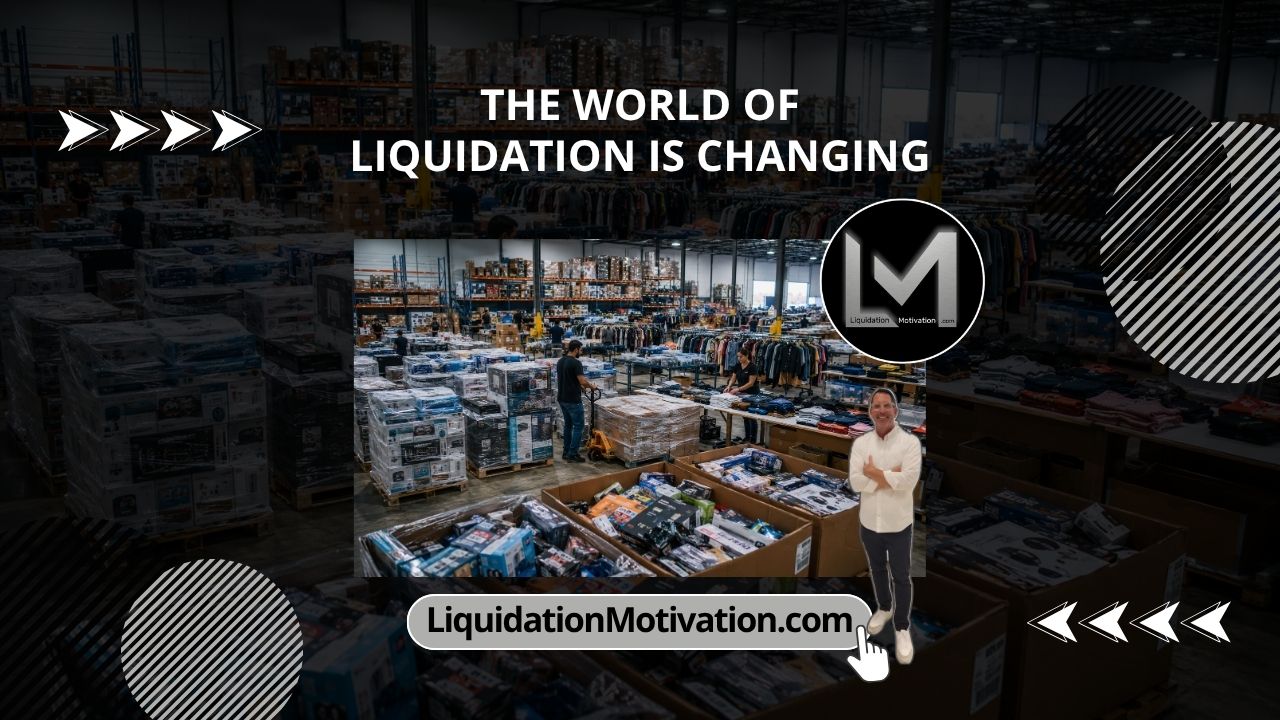
The World of Liquidation Is Changing
Amazon FC loads that used to cost around $17,000 are now closer to $23,000. Tom went about two months without Amazon trucks, and his team just finished sorting 150,000 pieces of clothing to create another source of sellable inventory.
Guys, that is what the liquidation market looks like right now.
The problem is not simply finding a truck. It is knowing you can get enough of the right inventory every week at a cost your business can handle.
For a long time, many bin stores treated Amazon as the inventory plan. Today, relying on it as your only dependable source is a serious risk.

What Changed With Amazon Loads?
The past six months have been rough for Amazon buyers.
During the Christmas season, trucks became difficult to secure. Then January and February brought loads with weak merchandise, including old and expired food. After that, inventory dried up again.
Now trucks are returning at significantly higher prices.
A load moving from $17,000 to $23,000 adds $6,000 to your cost before you unload, sort, test, price, or sell a single item.
That increase does not automatically create $6,000 in additional sales. In a bin store, the price ladder still has to make sense to the customer. You cannot keep raising restock-day prices every time your inventory cost goes up.
At some point, the cost of goods becomes too high for the model.
Tom canceled contracts when the numbers reached that point. That is an important lesson. A truck may be available, but that does not make it a good buy.
Save your damn money when the recovery does not justify the price.
Why Fewer Loads Are Reaching Independent Buyers
More auction companies and large end users are now buying truckloads directly.
That removes inventory that previously passed through contract holders and eventually reached smaller liquidation businesses. With fewer loads available and more stores competing for them, buyers are being pushed toward higher prices.
Some will overpay because they are afraid of having empty bins.
That is the scramble game.
You buy a truck because the store needs product, not because the truck makes financial sense. Then you spend the week trying to recover from a bad purchase.
Avoid the scramble game by developing inventory options before you desperately need them.

Pallet Count Does Not Tell You Enough
Tom is currently bringing in two to three Lowe’s truckloads a week. When Lowe’s has a lot of excess inventory, the pallets are generally fuller and stacked higher.
When inventory is tight, the same merchandise may be spread across more pallets.
A vanity and a few related items that should fit on one pallet can become two separate pallets. The buyer sees a larger pallet count, but the truck does not necessarily contain more value.
That is why “How many pallets?” is not enough.
You need to understand how the product is packed, how much of the trailer is actual merchandise, and whether the current loads look like the loads the vendor sold three months ago.
Retail programs change. Warehouses change how they process merchandise. A source that produced great loads last year may be producing weak loads today.
Buy the truck in front of you, not the reputation attached to it.
Build Inventory Sources That Fit Your Operation
The answer is not to replace Amazon with another single retailer and create the same problem again.
The goal is to build several sources that serve different parts of the business.
A Lowe’s load may work well for pallet buyers or auctions. Clothing may work for flea market vendors and online sellers. Target, Walmart, Dollar General, processed loads, and 3PL inventory can each fill different gaps.
That does not mean every category belongs in your warehouse.
Before adding a source, decide whether your team can sort it efficiently, whether your customers will buy it, and whether you have a realistic way to move the leftovers.
Available inventory is only useful when it fits your system.

Clothing Is a Real Pivot, but It Takes Work
Tom’s team spent months sorting approximately 150,000 pieces of clothing. They removed bad merchandise and separated the remaining inventory into sellable groups.
That labor matters.
Clothing can be readily available, but it is not effortless inventory. It has to be inspected, organized, priced, and matched with the right buyer.
Tom is selling new-with-tag clothing for around $1.50 per piece, similar clothing without tags for $1 per piece, and jeans for $6 per pair. Some of those jeans have original retail tags of $130 to $140.
The original tag is not the resale value. What matters is whether the reseller can buy at $6 and move enough pairs at a profitable price.
That is where volume over value applies.
Do not hold every piece waiting for the perfect customer. Build enough margin into the purchase so the product can move through flea markets, online platforms, local sales, or bulk deals.
The business is in the turnover.
TikTok and Whatnot Solve Different Problems
Tom’s team sold a juicer for around $100 on TikTok, while a similar item brought roughly $35 on Whatnot.
Based only on selling price, TikTok looks better.
Operationally, the answer is less obvious.
Whatnot is easier for the team to manage, especially when it comes to shipping and customer complaints. TikTok can produce higher prices, but the platform still creates more issues that the staff has to resolve.
That is why Tom is running both.
Instead of choosing a platform based on one sale, compare what happens after the item sells. Look at fees, labor, shipping problems, complaints, refunds, and how quickly the order gets completed.
The best selling channel is the one that produces dependable net profit without overwhelming the operation.

Rules for Buying Truckloads
Before buying, make sure you understand the type of merchandise, the condition, and the likely recovery.
A vendor should be able to explain where the load came from, whether it contains returns or shelf pulls, and whether it is manifested. You also need to know if the truck includes food, oversized items, incomplete merchandise, or a heavy damage percentage.
Consistency matters just as much as the quality of one truck.
A great load that appears once does not support weekly payroll and rent. Ask whether the source is recurring and how often the product is realistically available.
When the vendor cannot provide clear information, build more risk into your numbers. Do not use the best possible outcome to justify the purchase.
Use conservative recovery estimates and leave yourself room for damage, labor, and merchandise that will never sell.
Rules for Selling Pallets
Pallet houses need a clear policy:
All pallets are sold as is. No refunds, returns, or exchanges.
The policy should appear on invoices and be explained before the customer pays.
Liquidation pallets are mixed inventory. Some items will sell quickly. Others will take work, and a portion may have very little value.
The buyer is responsible for understanding that risk.
A reseller cannot list a few pieces on one platform, make no sales, and decide the pallet was bad. Different merchandise needs different selling channels. Searchable products may work on eBay. Large items may move faster through Marketplace. Lower-cost goods may belong at a flea market or in a bundle.
Tom’s point is simple: the people who make money know how to get rid of the difficult merchandise.
They do not expect every item to be a winner.

How Bin Stores Should Rotate Inventory
A bin store needs enough product to make restock day worth the customer’s trip.
That does not mean dumping weak inventory into the bins just to make them look full.
Fill your freaking bins with merchandise that gives shoppers a reason to dig.
As the daily price drops, pay attention to what remains. Product that survives the full pricing cycle needs a different exit.
Move stronger items to auctions or online platforms. Bundle small merchandise that is not worth selling individually. List bulky items locally. Sell the remaining product in reseller lots when recovering space is more valuable than squeezing out another dollar.
Customers notice when the same dead inventory keeps returning to the floor.
Rotation protects both the customer experience and your cash flow.
Solve the Supply Problem Before Expanding
Tom is sending 72 standard bins to his Georgia store and plans to build another 200 bins for a possible future location.
Building bins is not the hard part.
The real question is whether there will be enough affordable merchandise to fill them every week.
A bigger store increases rent, payroll, and inventory demand. It also makes every supply interruption more expensive.
Before opening another location, know how much product it will require, where that product will come from, and what happens when a major source disappears for sixty days.
Expansion should follow a reliable supply chain. It should not be used to create one.
What Operators Need to Do Now
Look at where your inventory came from during the last ninety days.
If one retailer or one contract holder supplied most of it, start reducing that risk. Test other sources in amounts your business can absorb, then track the actual results.
Do not judge a load by retail value or by the best items found during sorting. Measure what you recovered, how long it took to sell, how much labor it required, and what percentage became dead inventory.
Those numbers will tell you which vendors deserve another order.
The world of liquidation is changing, but the basic rule has not changed with it: buy correctly, move the merchandise, and protect your cash.
Do that, and you can adjust when a source dries up or a market changes.
For more practical liquidation strategies, visit www.LiquidationMotivation.com.
Now go out there and make some money.
