The Good, The Bad & The Liquidation Business
The Good, The Bad & The Liquidation
Six pallets of Zappos merchandise cost me $8,500. That puts me into the inventory at roughly $12 to $13 per item. At the same time, I am getting freight quotes from $900 inside Florida, $2,800 from Georgia, and $4,000 from Indiana.
Guys, those numbers explain the liquidation business. There is money in it, but the easy money is gone. A load can look profitable at the warehouse and become a bad buy once freight, labor, damage, and slow inventory hit the calculation.
The Good: Real Opportunities Still Exist
That Zappos load has branded shoes, clothing, backpacks, purses, and jeans from Nike, Puma, Levi’s, Under Armour, and Nine West.
At $12 to $13 per unit, some products should work. A backpack tagged at $45 might sell for $20. A purse that retails around $80 to $120 could produce a strong recovery. The shoes may work on Whatnot or TikTok because buyers understand the brands.
But I do not know whether the load is profitable yet.
Buying recognizable brands does not automatically create profit. I still have to sort the merchandise, identify damage, choose the right selling channel, pay people to process it, and move the weak items.
Some merchandise may only break even. The stronger products need to carry the load and push total recovery high enough to justify buying again.
Track the complete recovery before you reorder. Do not let a few great shoes convince you the whole load worked.
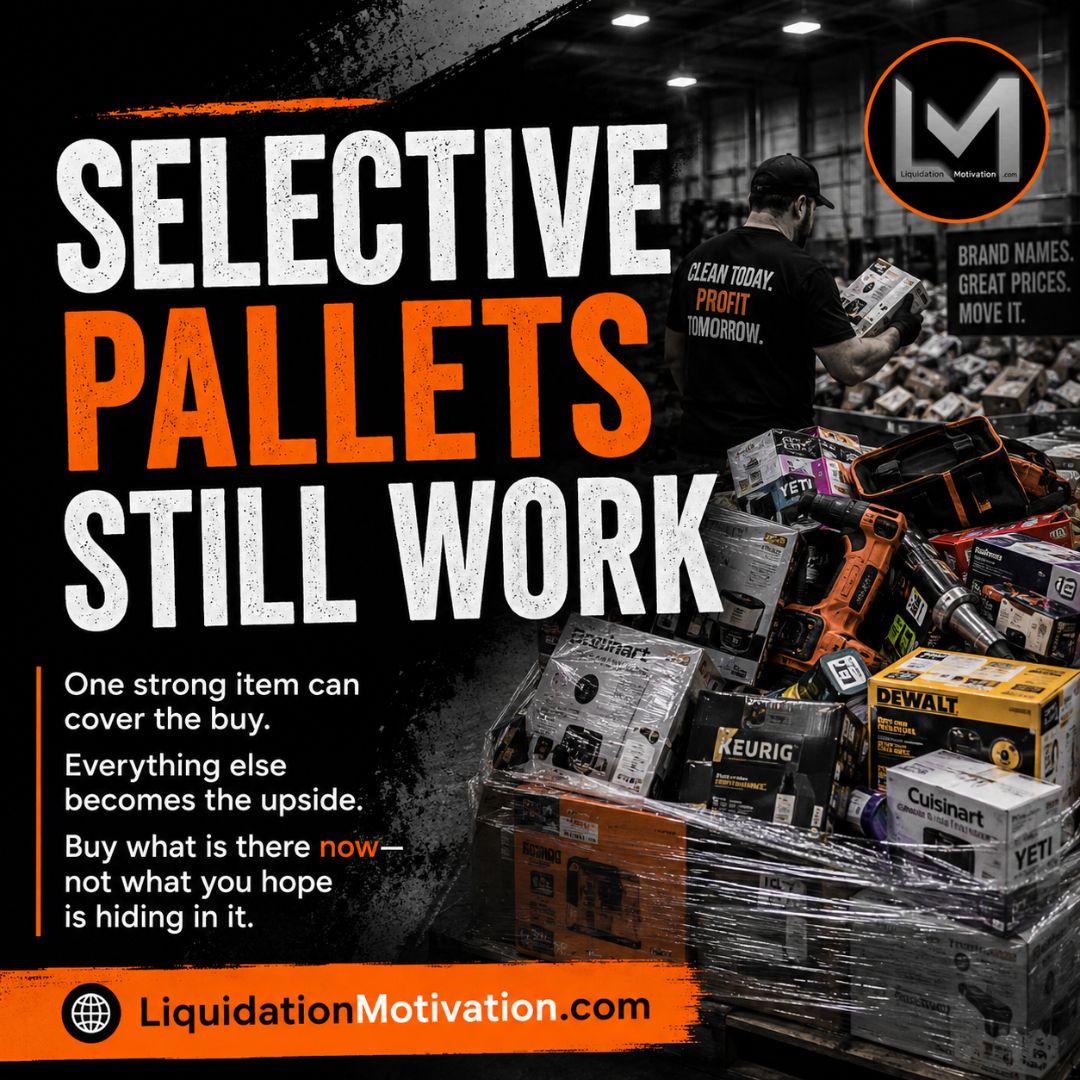
Selective Pallets Can Still Work
I bought a Lowe’s pallet for $350 because it had a worktable I wanted. The table was worth around $300, and the pallet included a Milwaukee toolbox worth about $500.
The plan was simple: sell the toolbox, recover the purchase price, and keep the table. Anything else becomes additional recovery.
Another $300 pallet included a Ryobi toolbox that can sell for around $350 in good condition. That item can cover the cost while the remaining merchandise creates the profit.
Pallet count means nothing by itself. One useful anchor item can change the deal, while a tall pallet of weak seasonal merchandise can still be garbage.
Inspect what is actually there and identify the products most likely to repay your cost.
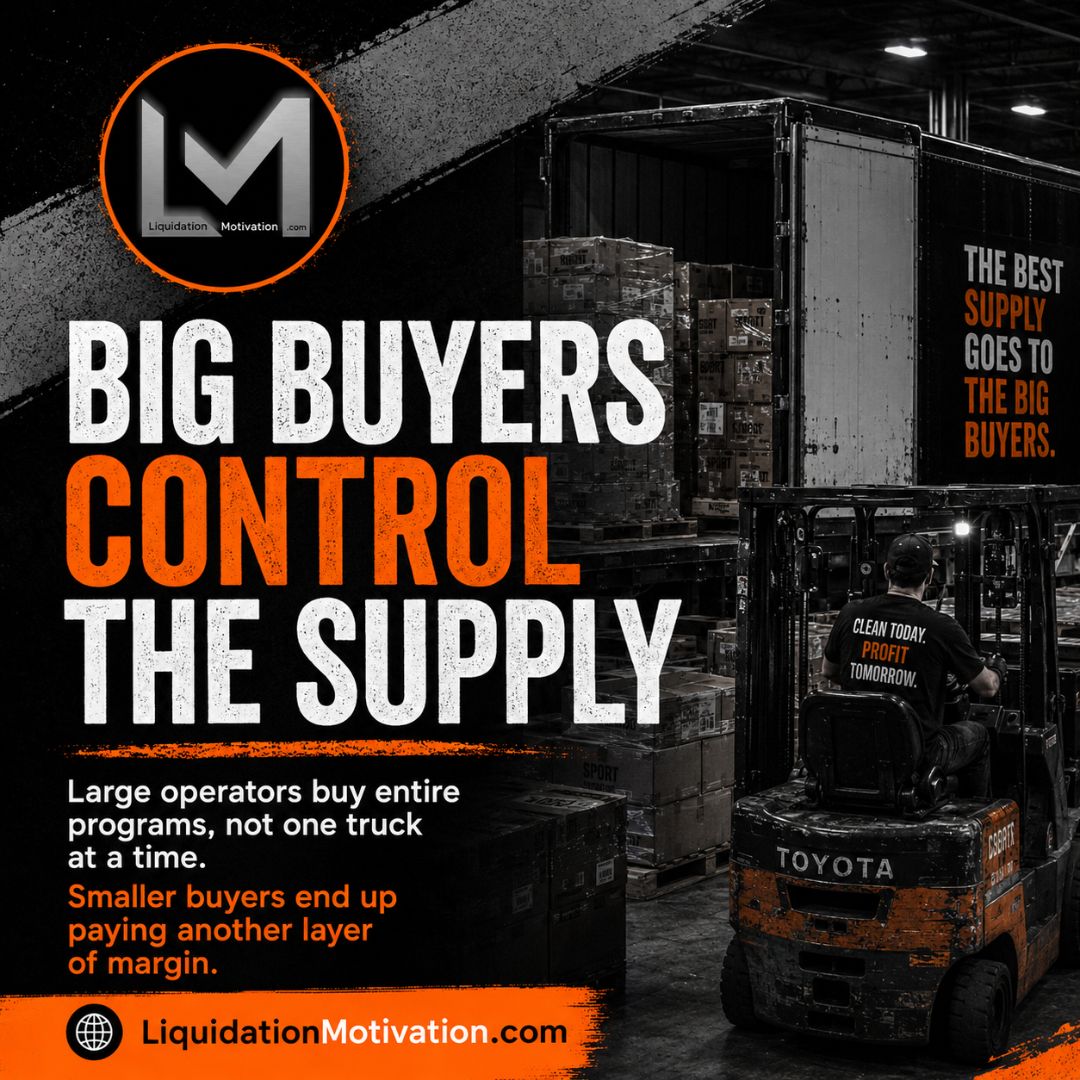
The Bad: Bigger Buyers Control More Supply
When I started, pallets could cost $100, $200, or $300. Some companies gave away truckloads because they wanted dead stock out of the warehouse.
That world is gone.
Large buyers now walk into facilities and offer to take everything. I do the same when I need inventory for a network of 10 to 20 stores. If a facility produces 10 truckloads per month, the buyer who commits to all 10 usually controls the deal.
The smaller operator then buys through another layer and pays that buyer’s margin, freight, warehouse costs, and handling expenses.
New operators are competing against companies with larger warehouses, multiple stores, and enough cash to lock up recurring supply. Buying random trucks from random brokers is not a strategy. You need an operational advantage.
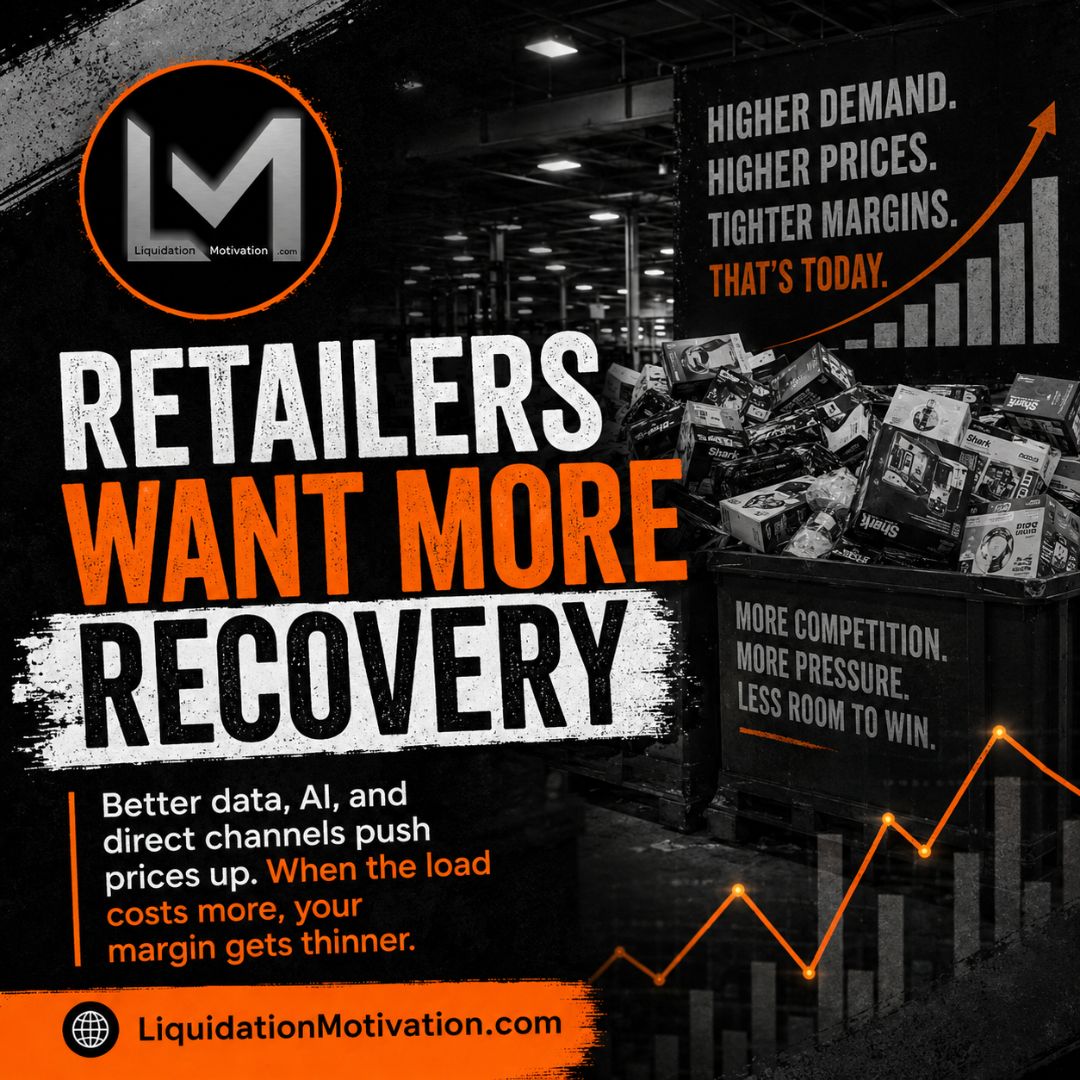
Retailers Want More of the Recovery
If a retailer liquidates $100 million in merchandise at 5%, it recovers $5 million. If better data, AI, direct marketplaces, and stronger contracts raise that recovery to 10%, it gets $10 million.
They are not leaving that extra $5 million on the table so independent liquidators can keep wider margins.
That pressure shows up in the purchase price. Amazon FC inventory that once traded at much lower percentages is now being offered around 9% or 10% in parts of the market.
When the load costs more but your selling prices stay the same, the increase comes directly out of your margin.
Save your damn money. You need cash for the right opportunity, not just the next available truck.
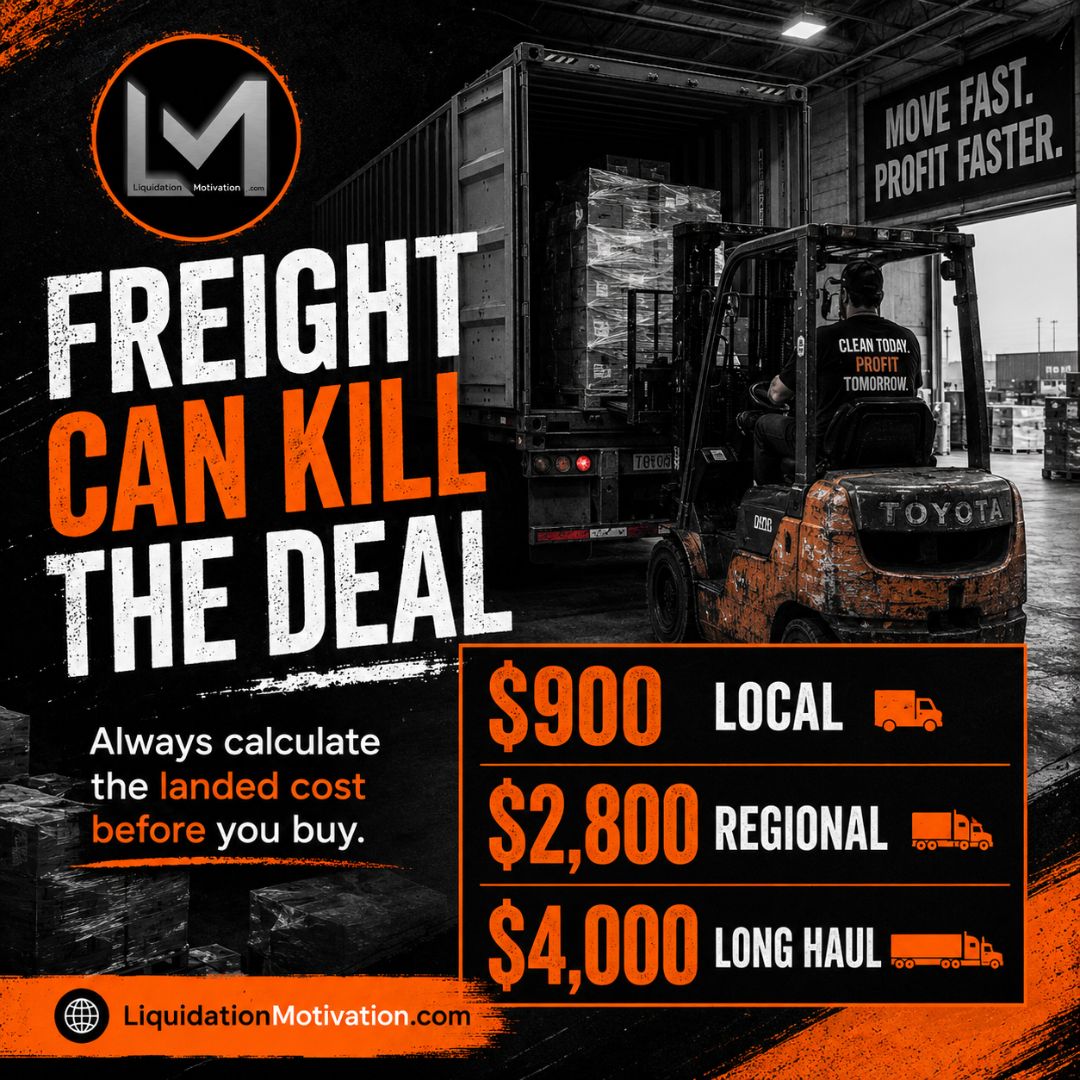
Freight Can Kill a Good Load
A Home Depot program may have better tools than a nearby Lowe’s program, but a $4,000 freight quote from Indiana changes the deal. Even Georgia to Florida at $2,800 can wipe out the advantage of better merchandise.
Always calculate landed cost, not warehouse price.
Add merchandise, freight, unloading, processing labor, marketplace fees, damage, and inventory that may never sell. Then divide that amount by the realistic number of sellable units.
Local supply matters because freight becomes a competitive advantage. A decent nearby load may outperform a great load several states away.
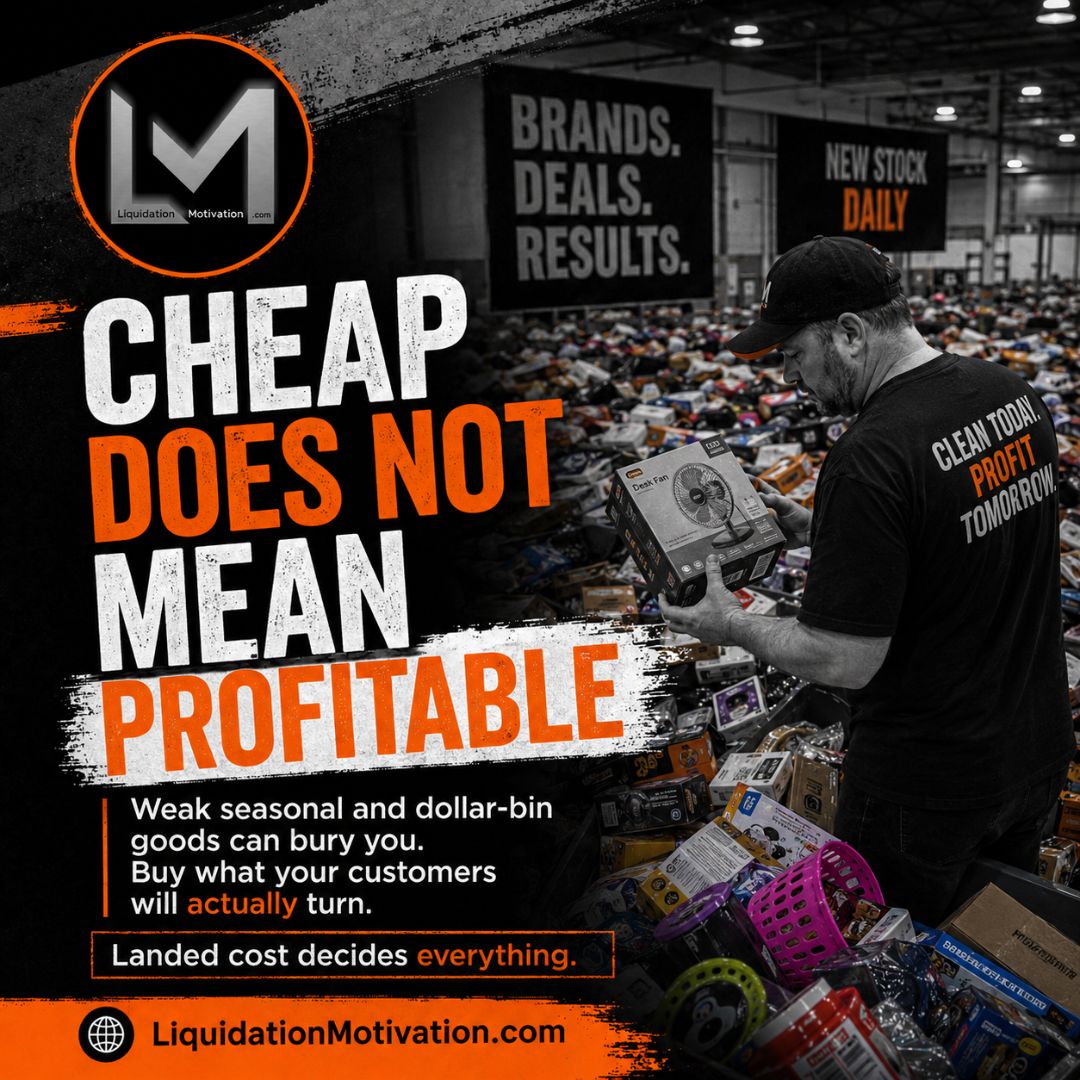
Do Not Buy Cheap Garbage
Beginners confuse a low truck price with a good deal.
A $5,000 Dollar General truck full of weak seasonal goods can lose money. Target Bullseye inventory may be inexpensive per unit, but cheap front-of-store merchandise is difficult to move when customers do not want it.
Volume over value only works when the volume is useful and your operation can sell it.
Ask what the merchandise is, where it came from, whether it has been processed, and what was removed before you saw it. Be careful with leftover inventory from a closing bin store. The premium products may already be gone.
Buy based on the current merchandise, not the vendor’s old reputation.
The Operator’s Rule
There is still money in liquidation. A good truck breakdown can produce $5,000 in gross revenue, and repetition can build a serious business.
But you must know your costs, protect your supply, and use the right channel for each product. Put exciting products in the bins when they create repeat customers. Pull truly premium items when another channel creates better recovery. Bundle weak goods and stop returning dead inventory to the floor.
Before buying your next load, calculate the landed cost and identify exactly how the first dollars are coming back.
Learn more about building a stronger liquidation operation at LiquidationMotivation.com.
Now go out there and make some money.
