How To Move Inventory When Amazon Loads Slow Down
When Amazon Slows Down, You Better Know How To Move Something Else
Guys, this is where liquidation operators either grow up or get buried.
We’re talking $250 average Lowe’s pallets, selling around $300–$350, trying to make $100 a pallet. We’re talking 500 Disney power banks at $15 each, that’s a $7,500 pallet. We’re talking 16,900 pairs of jeans with $120 retail tags, moving wholesale at $6 a pair.
That’s the business.
Not theory. Not cute little reseller talk.
Real truckloads. Real warehouse problems. Real decisions.
Because when your normal Amazon LPN and FC loads dry up, you better not sit there crying about it.
You better pivot.
You better find Lowe’s.
You better find unclaimed mail.
You better find clothing.
You better find CVS, electronics, heaters, mattresses, power banks, auto parts, whatever you can actually make money on.
Because the bins don’t care about your feelings.
You still have to fill your freaking bins.
Stop Worshipping One Type Of Load
A lot of people get spoiled.
They get one good Amazon source.
They get used to one kind of pallet.
They build their whole business around one lane.
Then the market changes.
Now what?
Now they’re playing the scramble game.
And I hate the scramble game.
When you don’t have backup categories, backup vendors, backup sales channels, and backup buyers, you’re not running a liquidation business.
You’re gambling.
Amazon is great when it’s flowing. But what happens when it’s not?
You better know how to sell Lowe’s.
You better know how to sell clothing.
You better know how to sell unclaimed mail.
You better know how to sell ES scrap.
You better know how to sell weird seasonal loads like heaters in Florida.
That’s how you survive.
That’s how you stay moving.
That’s volume over value.
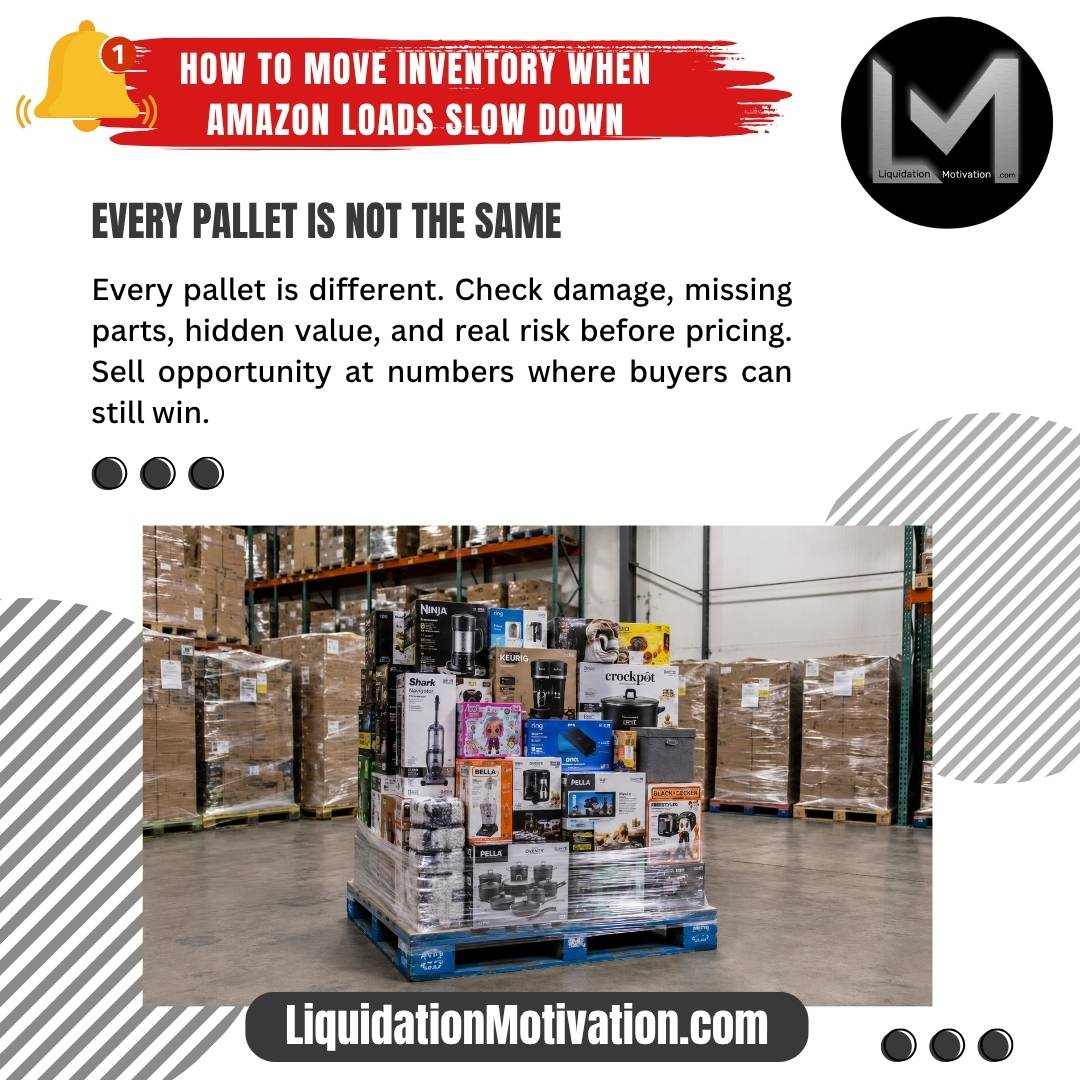
The Lowe’s Lesson: Every Pallet Is Not The Same
Let’s talk Lowe’s.
Lowe’s loads can be great.
They can also be ugly.
You might see a mower on top and think, “Boom, that’s a $400 item.”
Slow down.
Does it have batteries?
Does it run?
Is it broken?
Is the return reason obvious?
Is the box destroyed?
Is the bottom of the pallet full of junk?
You don’t know.
That’s why you cannot price every Lowe’s pallet the same.
Some pallets are worth $350.
Some are worth $300.
Some need to be broken down because the top looks weak but there might be value underneath.
And the vanity problem?
Guys, vanities can make money, but the damage rate can be brutal. If half of them are cracked, broken, or missing tops, you better price that risk in.
Don’t sell dreams.
Sell opportunity at a price where your buyer can still win.
That’s how you get repeat buyers.
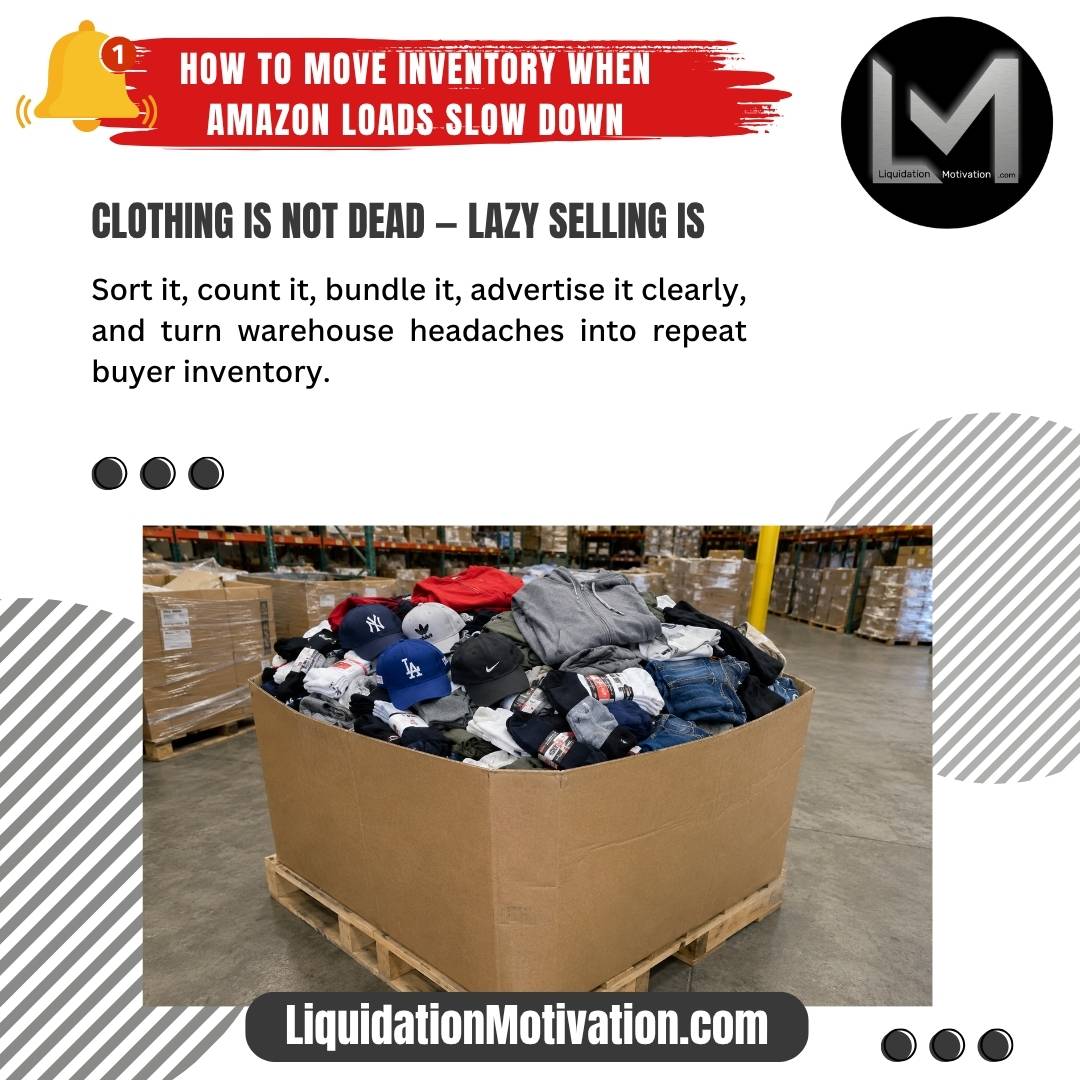
Clothing Is Not Dead — Lazy Clothing Sellers Are Dead
Everybody loves to say clothing is hard.
No.
Bad clothing is hard.
Unsorted clothing is hard.
Dirty clothing is hard.
Mystery gaylords with no count, no category, no quality control, and no tags are hard.
But clean clothing?
New with tags?
Polybagged?
Sorted into adults, kids, tagged, no tags, women’s, men’s?
That can move.
Tom’s strategy here is smart: build clothing pallets for local dealers. Make them easy to understand. Count them. Make the top look nice. Advertise them clearly.
That is how you turn a warehouse headache into a repeat buyer category.
Don’t just throw clothing in a corner.
Process it.
Count it.
Bundle it.
Move it.
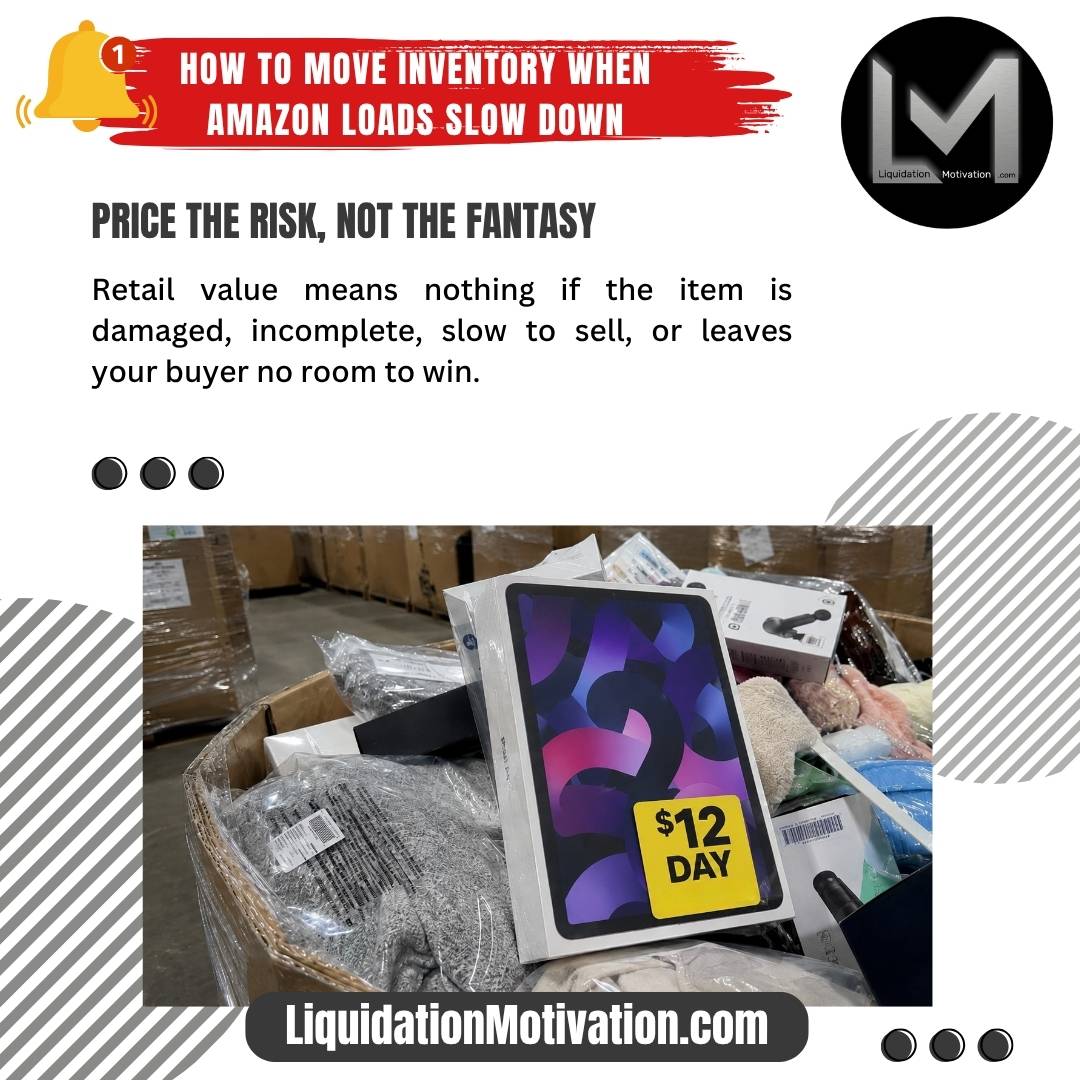
Price The Risk, Not The Fantasy
This is where people get crushed.
They look at retail value and lose their minds.
A $400 mower is not automatically worth $400.
A $120 pair of jeans is not automatically worth $120.
A $35 shirt is not automatically worth $35.
Retail price is just the starting point.
You have to price based on:
Condition
Completeness
Demand
Seasonality
Platform restrictions
Labor needed
Storage space
Damage rate
Speed of sale
That’s why the 30% rule matters when selling pallets.
Look at what visible value is on the pallet, then price it low enough that the buyer still has room to win.
That’s not weakness.
That’s how you build a market.
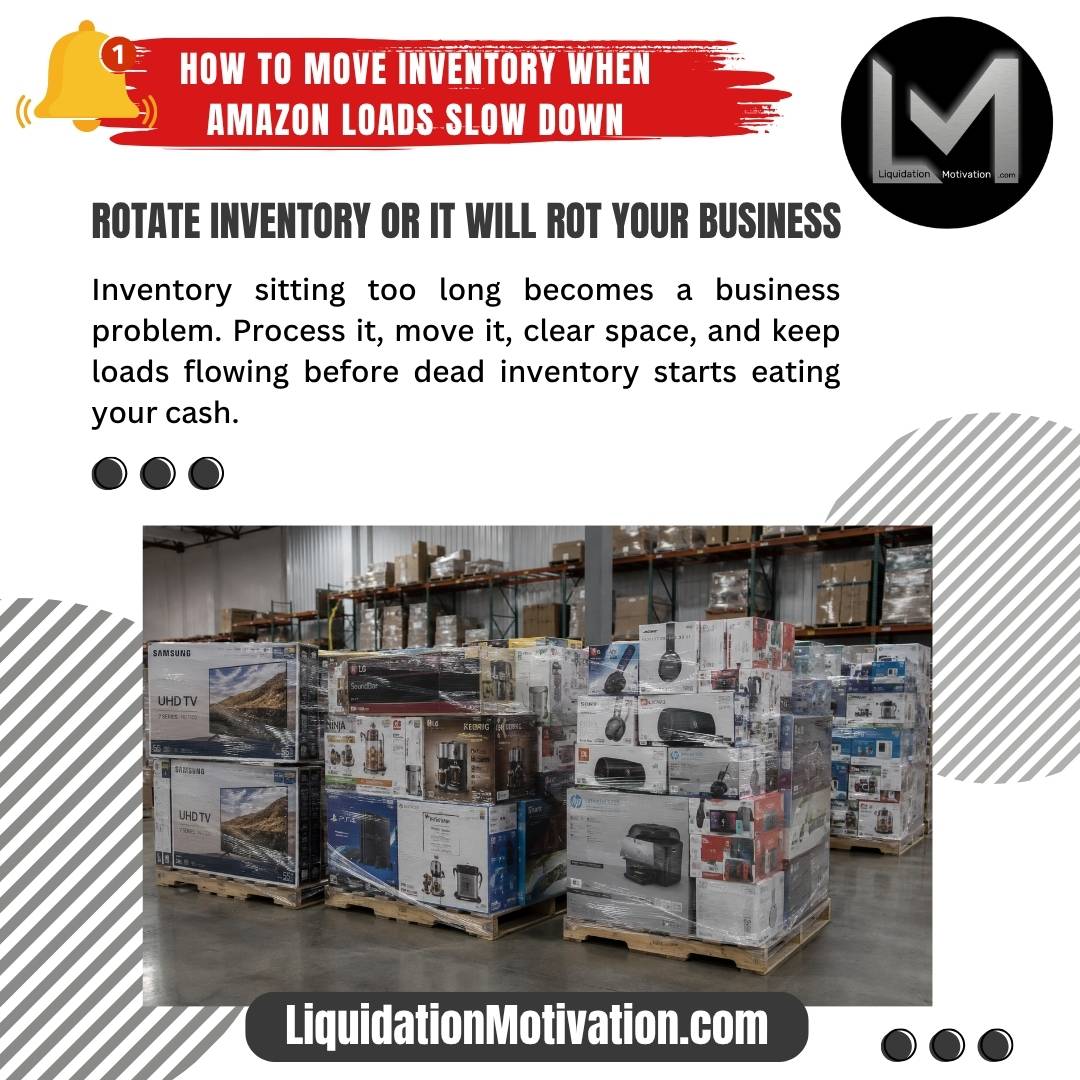
Rotate Inventory Or It Will Rot Your Business
Here’s the warehouse truth.
Stuff sitting for two months is a problem.
Stuff sitting for six months is a bigger problem.
Stuff sitting for years is not inventory anymore.
It’s a tax on your space, your labor, your brain, and your cash flow.
Tom said it right:
Loads in.
Lined up.
Loads out.
That’s the goal.
Not hoarding.
Not “I’ll get to it someday.”
Not building a museum of dead inventory.
Process the damn bins.
Move the furniture.
Manifest the heater load.
Sort the clothing.
Get the unclaimed mail ready.
Push the mattresses.
Clean the rooms.
Make space for the next truck.
That’s how you avoid the scramble game.
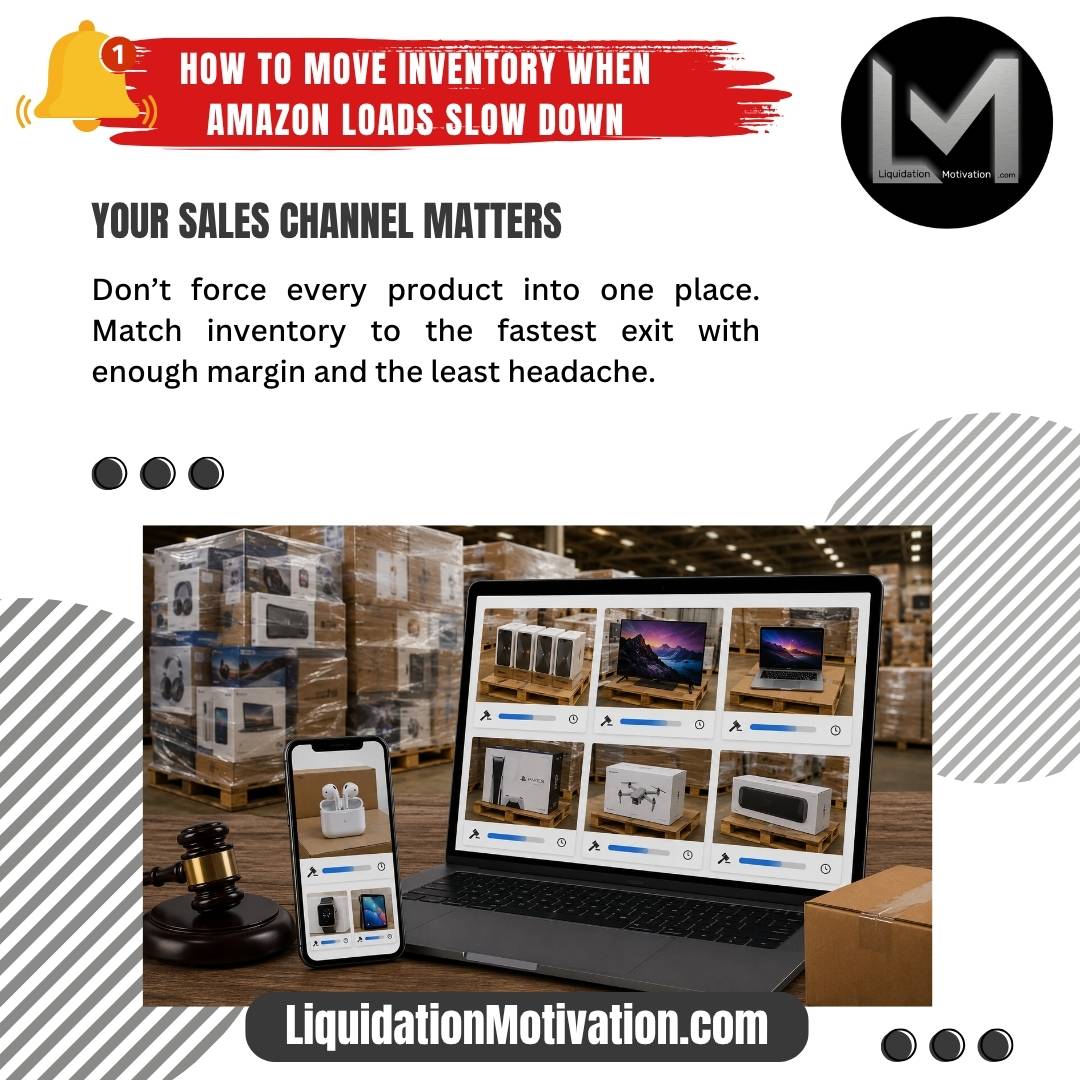
Your Sales Channel Matters
Whatnot works when your system is tight.
TikTok Live might bring more money, but it has a learning curve.
HighBid can move certain categories.
Facebook Marketplace can move local pallets.
Flea market dealers can move clothing.
Auctioneers can move bulk.
Bin stores can move volume.
The mistake is trying to force every product into one channel.
That’s amateur behavior.
The right question is:
Where does this product move fastest with the least headache and enough margin?
That’s the game.
Not “What do I like selling?”
Who cares what you like?
Sell what moves.
Save Your Money
This business will fool you.
One week you’re making money.
Next week you’re buried in vanities, furniture, seasonal heaters, broken returns, and pallets you should have never bought.
So when you hit a good load, don’t act rich.
Save your damn money.
You need cash for the next deal.
You need cash for freight.
You need cash for labor.
You need cash for mistakes.
You need cash when Amazon dries up and you have to pivot into Lowe’s, unclaimed mail, clothing, CVS, electronics, TikTok, Whatnot, and whatever else keeps the machine moving.
Cash gives you options.
Options keep you alive.
The Real Liquidation Mission
This business is not about finding one perfect load.
It’s about building a machine that can handle change.
Amazon slows down?
Move clothing.
Lowe’s gets cheap?
Move pallets.
Unclaimed mail is hot?
Feed the bins.
Heater load lands in Florida?
Manifest it and sell it up north.
Furniture taking space?
Get it out.
Old inventory sitting?
Process it.
Guys, stop waiting for perfect inventory.
Perfect inventory is not coming.
Build systems.
Build buyers.
Build channels.
Build speed.
Fill your freaking bins.
Avoid the scramble game.
Volume over value.
And when you get a chance to make money, don’t overthink it.
Go visit www.LiquidationMotivation.com for more real liquidation lessons, buyer strategy, truckload talk, and operator-level advice.
Now go out there and make some money.
