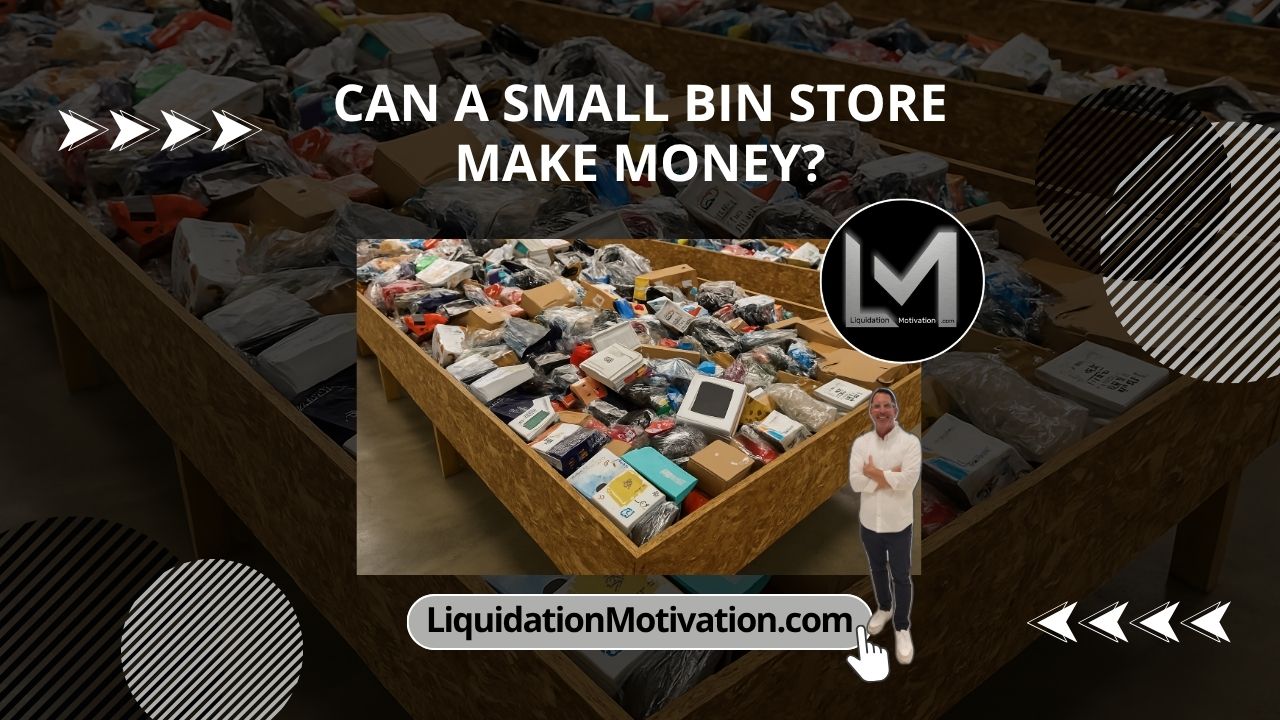
Can a Small Bin Store Make Money?
Cleaning Out 130,000 Sq Ft, Quitting Furniture, and the 5 Rules Small Bin Stores Keep Getting Wrong
We’re trying to clear out the warehouse.
Not “tidy it up.”
Not “organize a little corner.”
Clear it out—so the space next to the loading dock becomes what it’s supposed to be:
loads in, loads out. Fast.
Everyone’s busting their tail… and every time I step forward, the camera guy steps back like I’m about to bite him. 😂
But here’s the reality:
We’ve moved hundreds and hundreds of pallets out of here… and it still feels like we don’t have enough room.
That’s when you know you’ve got a problem.
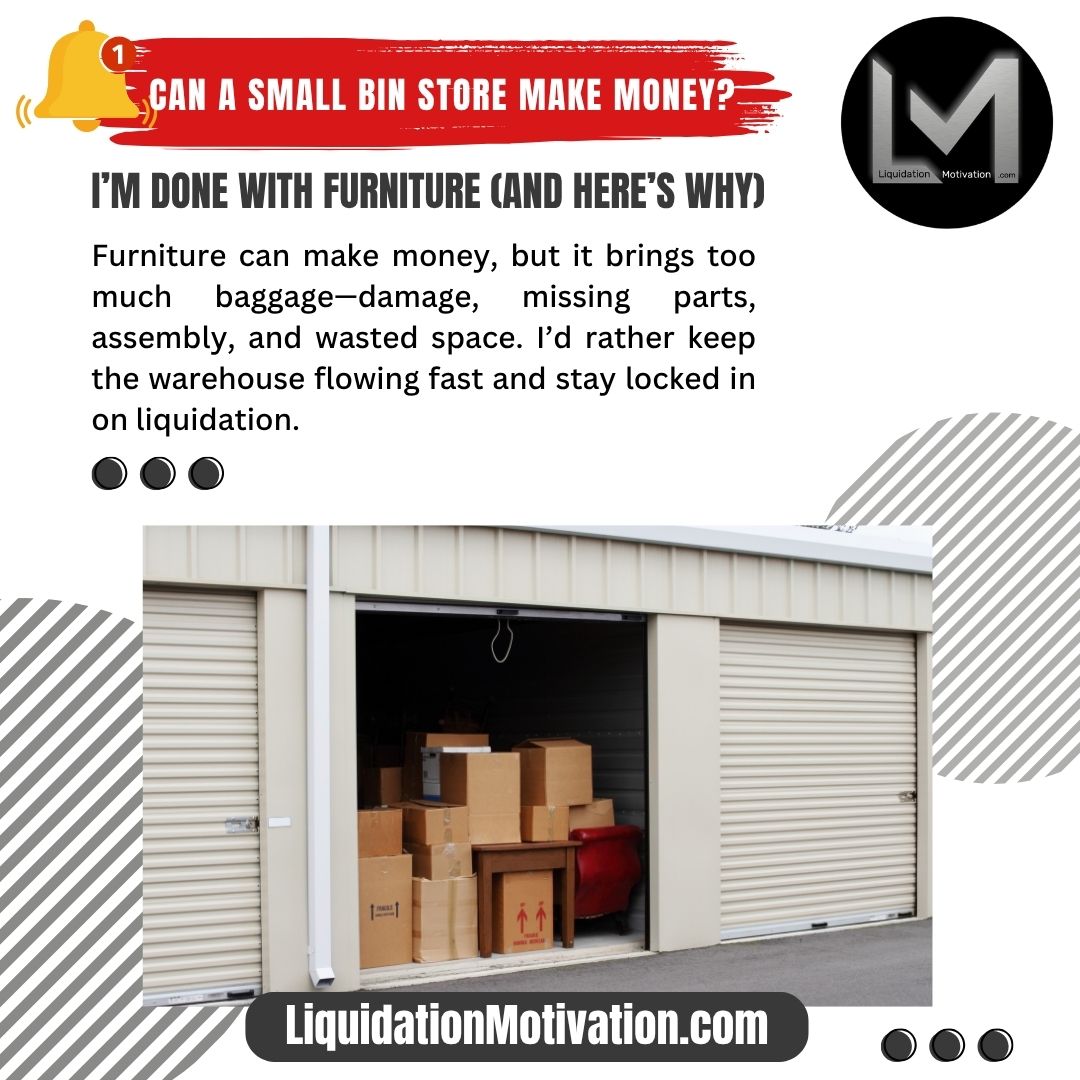
I’m done with furniture (and here’s why)
I tried furniture for the last 3–5 months.
And the problem wasn’t sales.
The problem was the baggage that comes with furniture loads:
maybe 50% is good
25% needs assembly / parts / time
25% is bad (damage, missing pieces, junk)
If you’re running a real furniture store with a system?
That’s fine.
But in a liquidation warehouse?
Furniture turns into this:
row after row after row of inventory that just eats space.
And space is everything when your entire business depends on fast flow.
If you want to do furniture, do it the right way:
get a truck
offer free delivery
offer free removal of old furniture
have a plan for dumping old furniture
advertise aggressively on Facebook Marketplace
promote the listings
You can absolutely make money in furniture.
I just don’t want to be in the furniture business.
I want to be in liquidation.
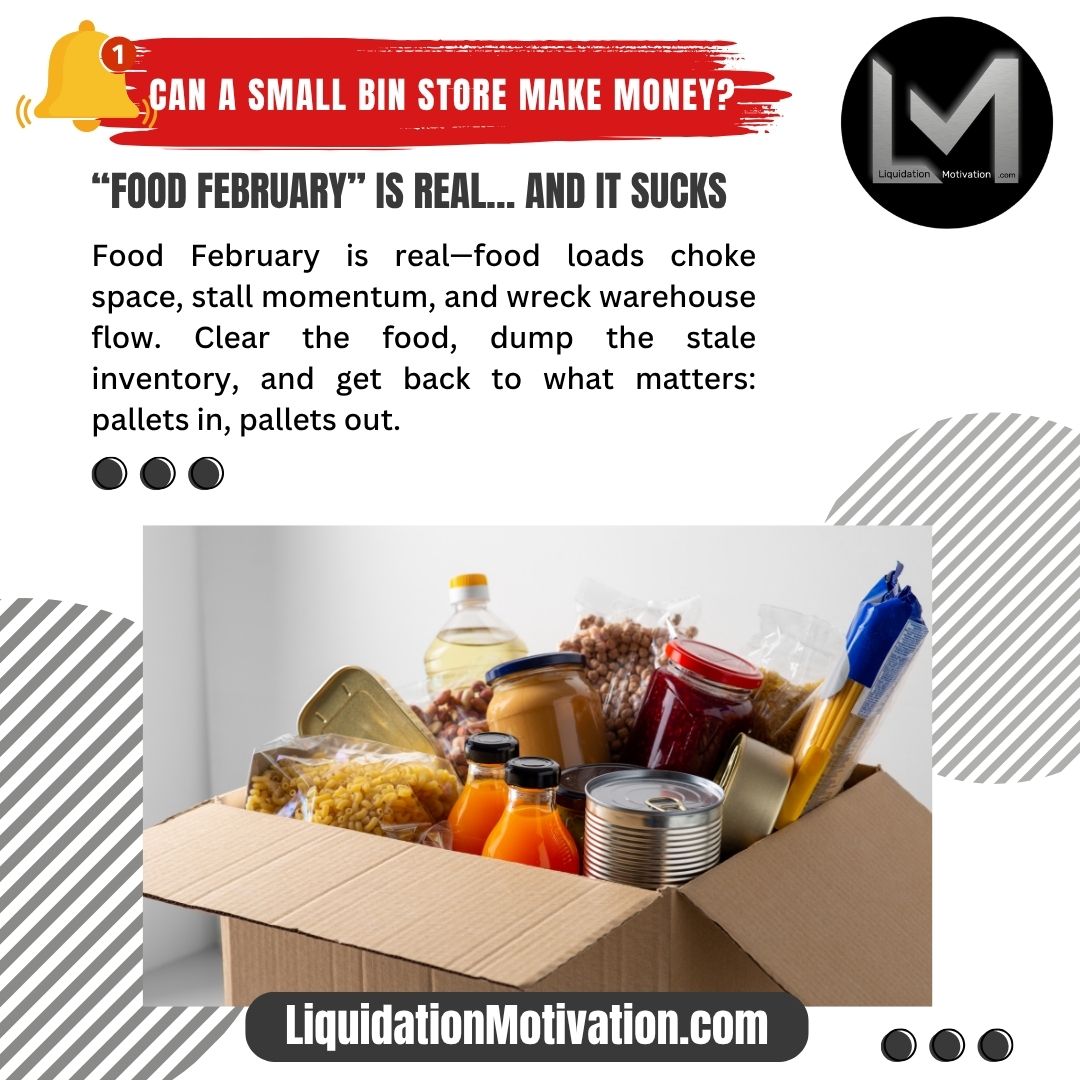
“Food February” is real… and it sucks
Everybody got food in February.
Call it what it is:
The Food February Crash.
Food loads clog space, kill momentum, and create problems nobody wants.
So the mission is simple:
food is gone
furniture is gone
stale inventory is gone
Then the warehouse becomes clean, efficient, and fast again.
Because if we’re only doing:
pallets in → pallets out
that’s the most efficient model for this operation.
The next chapter: move loads + supply bin stores
I’m doing more work moving loads all over the country—especially Florida.
Supplying bin stores. Building relationships. Scaling the network.
My goal this year is simple:
5x Liquidation Motivation.
And you don’t do that while half your warehouse is trapped in furniture purgatory.
Now… let’s talk BIN STORE RULES (sync starts here)
Tom’s not guessing here—this is what he’s seen work and what he’s seen fail.
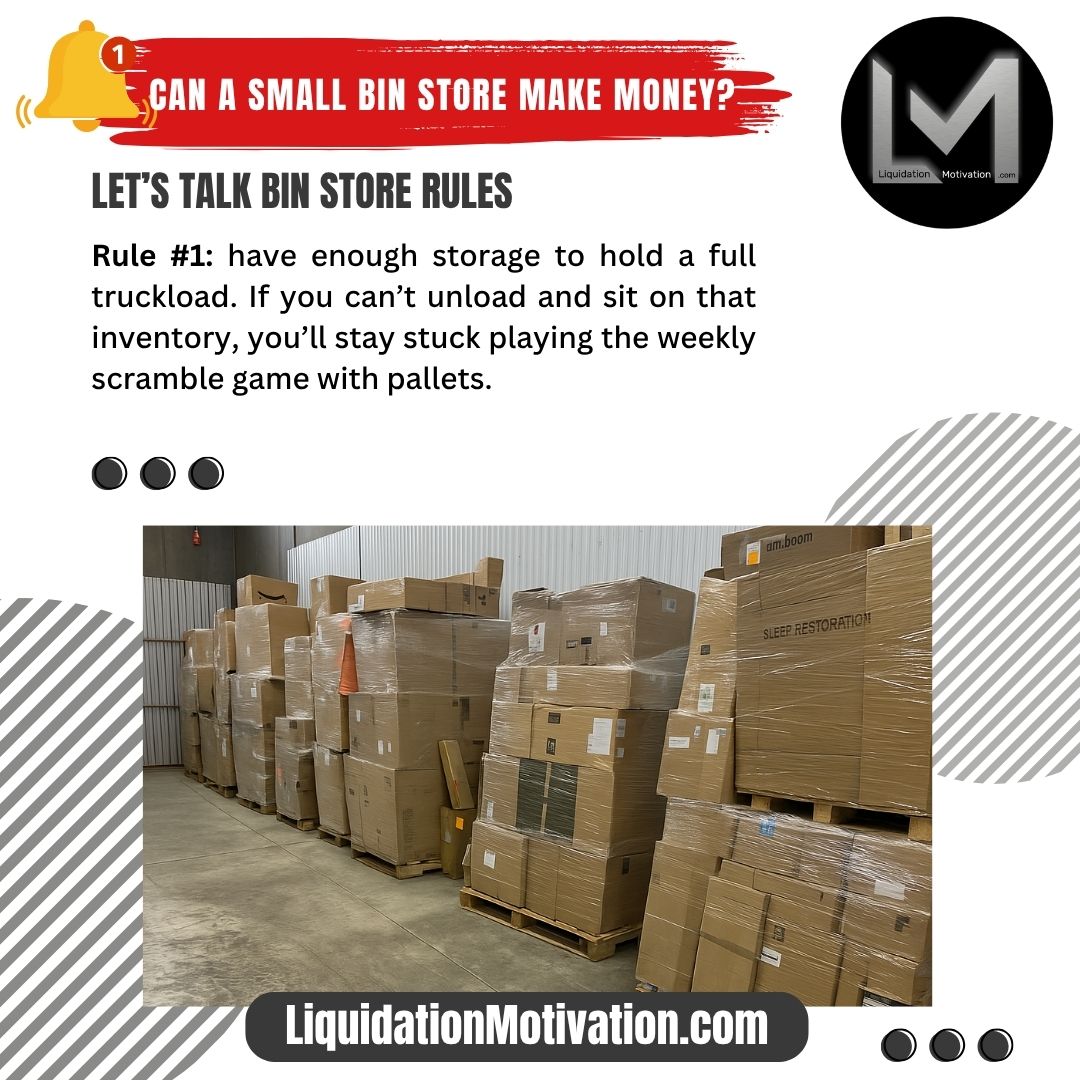
Rule #1: You need storage for a full truckload
If you’re doing a small bin store, optimal setup is:
as much room in the back as you have in the front.
Example:
3,000 sq ft front
you want serious backroom storage nearby/on site
Minimum you should plan around:
1 full truckload.
If you can’t buy by the truckload, your life becomes a weekly scramble buying pallets—more time, more cost, less margin.
And yes, you can combine loads:
12 pallets of LPN + 12 pallets of FC
to make one full truckload delivered to you.
But you still need the ability to unload and hold it.
Rule #2: Minimum 24 bins for a “small” bin store
Tom’s minimum recommendation:
24 bins (around ~4,000 sq ft)
Why 24?
Because 12 pallets typically fill 24 bins.
That’s the math that makes the whole thing work.
And if you’re smart, you run inventory like this:
Week 1 bins are loaded
Week 2 inventory is already staged
Week 3 truckload is arriving while you’re reloading
Do NOT run “just-in-time inventory”
If you’re ordering that same week for your reload…
You’re going to get burned.
Not every week.
But often enough to wreck you.
Stay 1–3 weeks ahead so you don’t make panic buys and overpay.
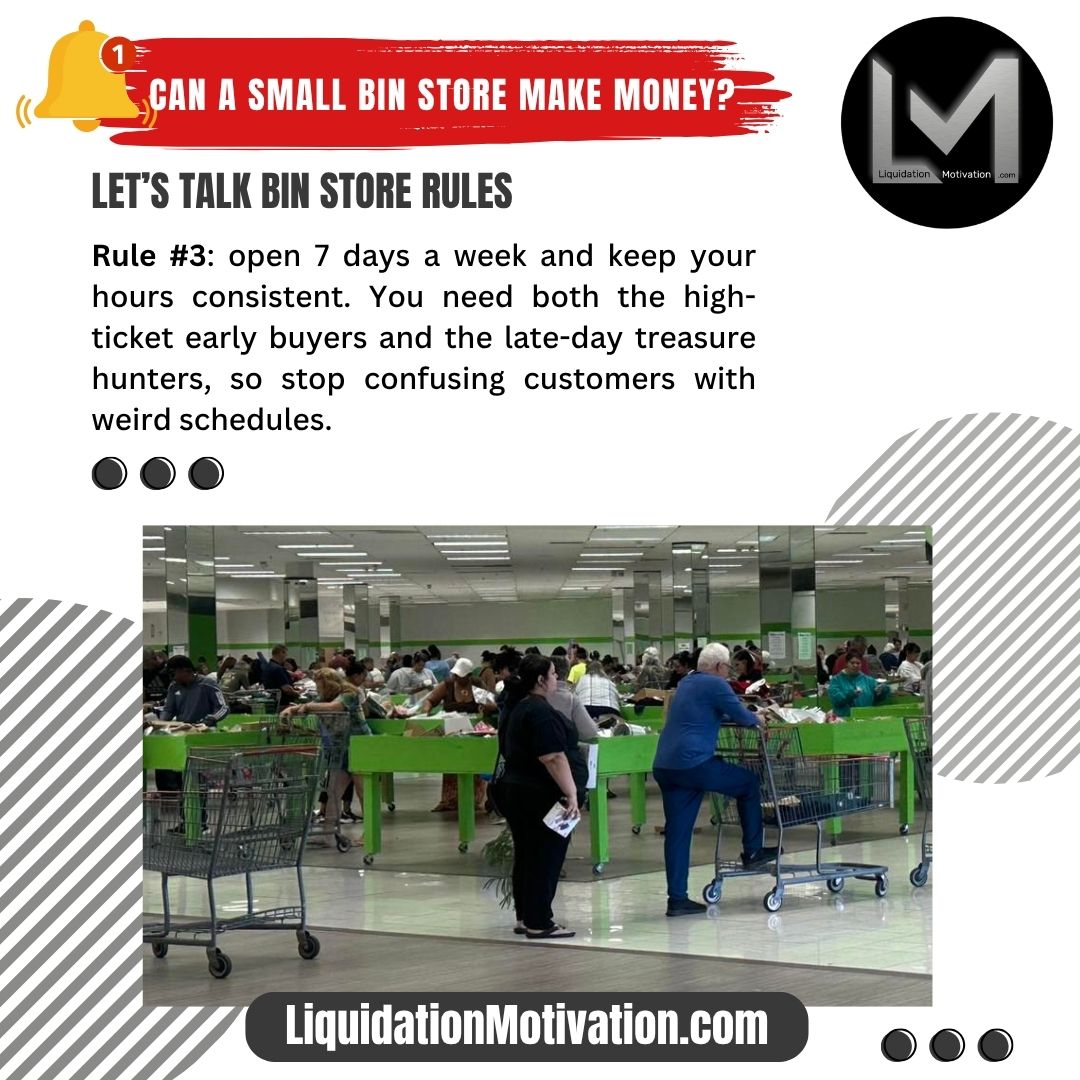
Rule #3: Open 7 days a week (or you’re part-time)
A bin store is work.
Open 7 days/week doesn’t mean you personally work 7 days/week.
It means:
you staff it
you keep it consistent
you don’t create massive price gaps because you’re closed
Tom’s preferred pricing cadence:
12 → 10 → 7 → 5→ 3 → 1 → 50¢
Why consistency matters:
your $12 buyer is hunting higher-ticket items fast
your $1 buyer is the scavenger hunting the diamonds everyone missed
Two different shoppers. Two different behaviors.
You need both.
Also:
keep your hours consistent
don’t do weird schedules like 11–6 one day, 12–5 the next
don’t confuse customers
Rule #4: Clean out bins every week — no leftovers
This is the easiest way to lose customers:
Walking into $12 day… and half the bins look like leftover trash.
Customers know what leftovers look like.
They want:
fresh
clean
full
good-looking bins
End of week:
sweep it out
bag sale / box sale if you want
donate it
or throw it out and move on
Fresh reload = trust.
Rule #5: Trust the system — and stop blaming everything else
If your bin store fails, there’s only one person to blame:
you.
Not the economy.
Not the weather.
Not “people don’t have money.”
We sell 55,000–60,000 items a week in bin stores.
People have money.
They spend it where the offer is strong and the system works.
If you’re losing, it’s usually execution:
bad inventory choices
inconsistent pricing/hours
not clearing bins
not marketing
not buying truckloads
not having suppliers lined up
sitting on your ass when you should be posting
Marketing is free right now.
TikTok hits 18–34.
Facebook hits 34–65.
Different platforms = different demographics.
Don’t marry your business to one audience.
Small bin stores can win.
But the owners who fail usually share the same pattern:
can’t secure loads
can’t buy truckloads
run inconsistent hours/pricing
don’t clean bins weekly
don’t market consistently
Follow the rules.
Work the system.
Execute clean.
Go build something real.
home | blog
