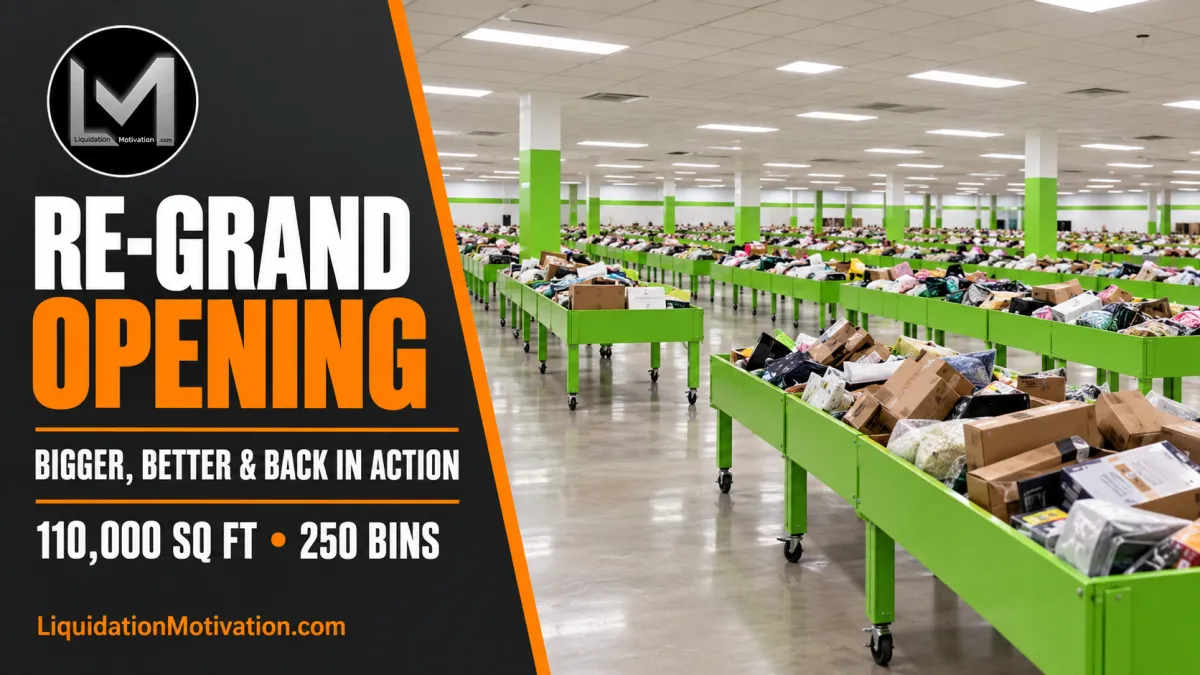
BinChasers Re-Grand Opening: Bigger, Better & Back in Action
BinChasers RE-GRAND OPENING! Bigger, Better & Back in Action!
BinChasers just moved from 86,000 square feet into a 110,000-square-foot building, closed for only one day, and reopened with plans for 250 bins. Guys, that is not just a bigger store. It is a bigger weekly inventory obligation. The team was already moving three or four truckloads every week and expected to add one or two more. More space only helps when you can keep it full with merchandise people will actually buy.
This move happened because a gym took over the company’s previous temporary lease space. Luckily, the new building was on the other side of the mall, so the team did not have to move everything across town. Employees worked late into the night, finished repairs, set up the register system, moved the bins, and prepared the store to reopen the next morning.
That kind of turnaround takes planning. The building still needed work, including repairs and replacement light fixtures after a lightning issue damaged the lighting throughout the store. Tom mentioned that having truckloads of bulbs and fixtures already available saved tens of thousands of dollars. That is an important lesson: expansion comes with costs that have nothing to do with inventory.
A Bigger Store Creates a Bigger Supply Problem
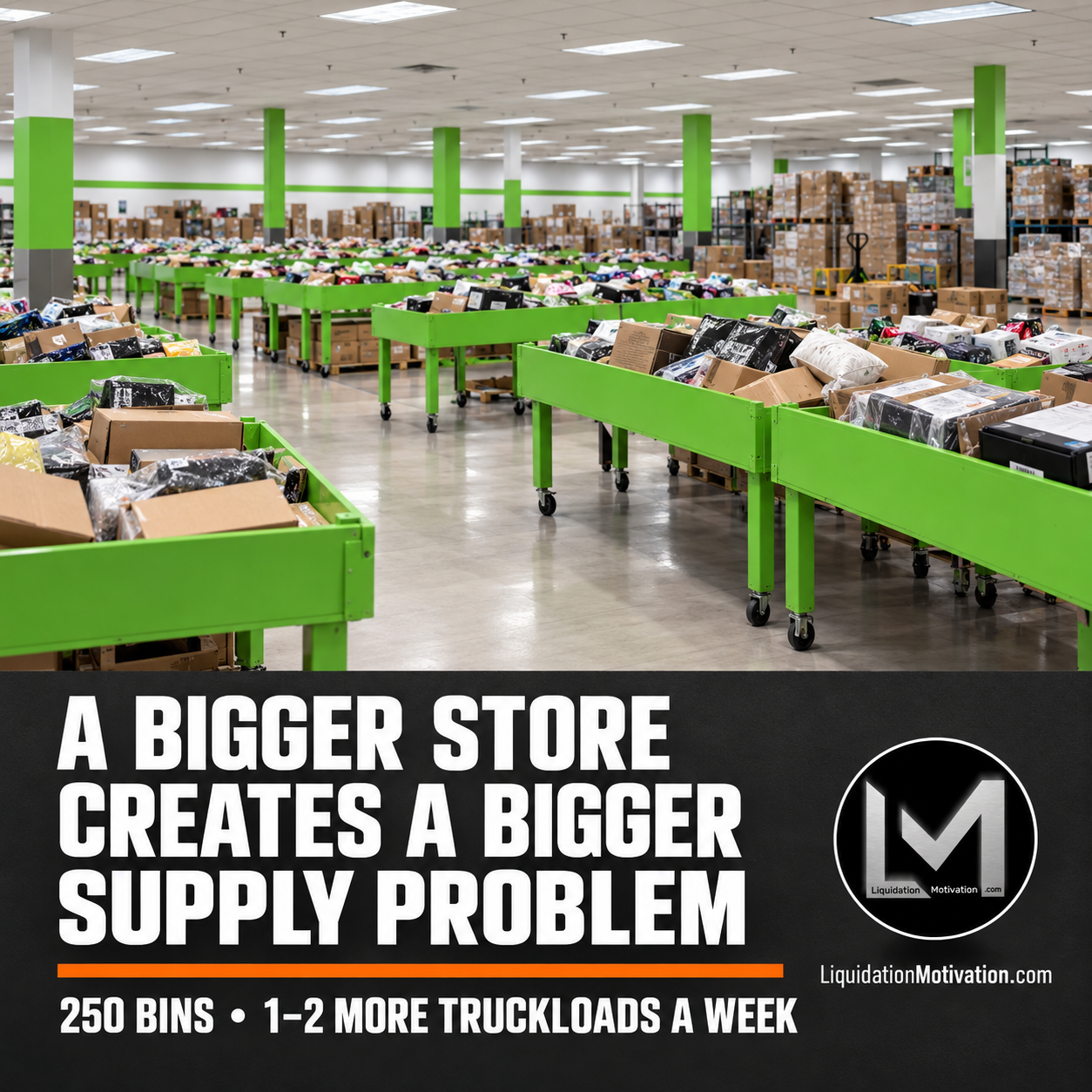
The new location was expected to hold 250 bins instead of 200. That extra capacity sounds exciting, but empty bins do not produce sales. BinChasers estimated that the larger operation would require one or two additional truckloads every week on top of the three or four loads already being processed.
That means the inventory plan has to come before the expansion. Operators need to know where the merchandise is coming from, whether the source is dependable, what condition the products are in, and how much labor will be needed to sort, test, price, and move everything. If you cannot consistently feed the store, the additional square footage becomes rent, payroll, and maintenance without enough merchandise to support it.
Fill your freaking bins but fill them with inventory that fits your customers and your pricing model.

The Extra Space Opened New Revenue Channels
BinChasers used the larger building to create several departments instead of putting every product into bins.
The first was a furniture section covering about 30,000 square feet. Through a Wayfair agreement, the store began receiving new furniture truckloads and planned to sell the products at about 50% of retail. The furniture would be tagged and priced separately instead of being treated like regular bin merchandise.
Tom said furniture was not normally his favorite category, but the contract made the opportunity practical. That is the right way to evaluate a new category. Do not add furniture, appliances, or oversized goods simply because you have room. Add them when the product quality, pricing, supply, and sales process make sense.
The second idea was a 10,000-square-foot live auction house. BinChasers planned to hold a weekly auction to move excess furniture, damaged items, premium merchandise, and products that were not performing well in the bins. The Lake Wales auction operation was already generating an additional $10,000 to $15,000 in weekly sales from one four-hour auction.
Not every product belongs in a bin. Some items need more space, a different audience, or a higher selling price. A separate auction channel can help recover value from merchandise that would be difficult to sell at a fixed bin price.
The third idea was the Rarest Exchange, a collectible marketplace with about 30 rental booths for products such as trading cards, sports cards, comic books, and other collectibles. BinChasers also planned to host rotating weekend trade shows, including events focused on different collectible categories.
This creates another potential income stream through booth rentals, collectibles, and event traffic. But it was not an overnight project. Walls, display cases, lighting, repairs, and setup were still being completed, with another month or two expected before everything was ready. A new revenue idea still requires time and capital before it can help pay the rent.

Marketing Brought the Crowd, but Inventory Converted It
For the re-grand opening, BinChasers promoted the event through Facebook Marketplace, TikTok, and Instagram. The store offered a $1,000 giveaway, around 50 additional prizes, iPads, laptops, a live band, and opening-day pricing of $12 for everything in the bins.
The response was massive. Customers began placing chairs outside the store hours before opening, and Tom estimated that between 600 and 1,000 people showed up. The store had approximately $60,000 worth of merchandise and more than 50,000 items available. Within minutes, the 250 shopping carts were gone.
The promotion created urgency, but the inventory gave people a reason to stay and shop. Customers were filling carts with electronics, massagers, smart bird feeders, home goods, tools, automotive accessories, and other products from Amazon, Home Depot, electronics loads, and auction merchandise.
After only three hours, the store had already passed its previous grand-opening sales record. At around 1:30 in the afternoon, hundreds of shoppers were still inside.
The lesson is simple: marketing can bring people through the door, but weak inventory will not create the same result. BinChasers had time to promote the event and time to load the store before opening. That preparation mattered.

The Store Became Valuable to the Mall
When BinChasers closed for one day during the move, Tom said mall traffic dropped by about 50%. During the reopening, the bin store brought a crowd large enough to increase traffic throughout the property. Customers visited the food court and nearby businesses while waiting, shopping, or leaving with full carts.
That traffic gave the property owner a reason to support the store. A bin store may not fit every mall concept, but a location that consistently brings customers can become an anchor for the surrounding businesses.
The practical takeaway is to understand the value you bring to the property. Sales are important, but foot traffic, customer activity, and support for neighboring businesses can also affect your relationship with the landlord.
Build Systems Behind the Chaos
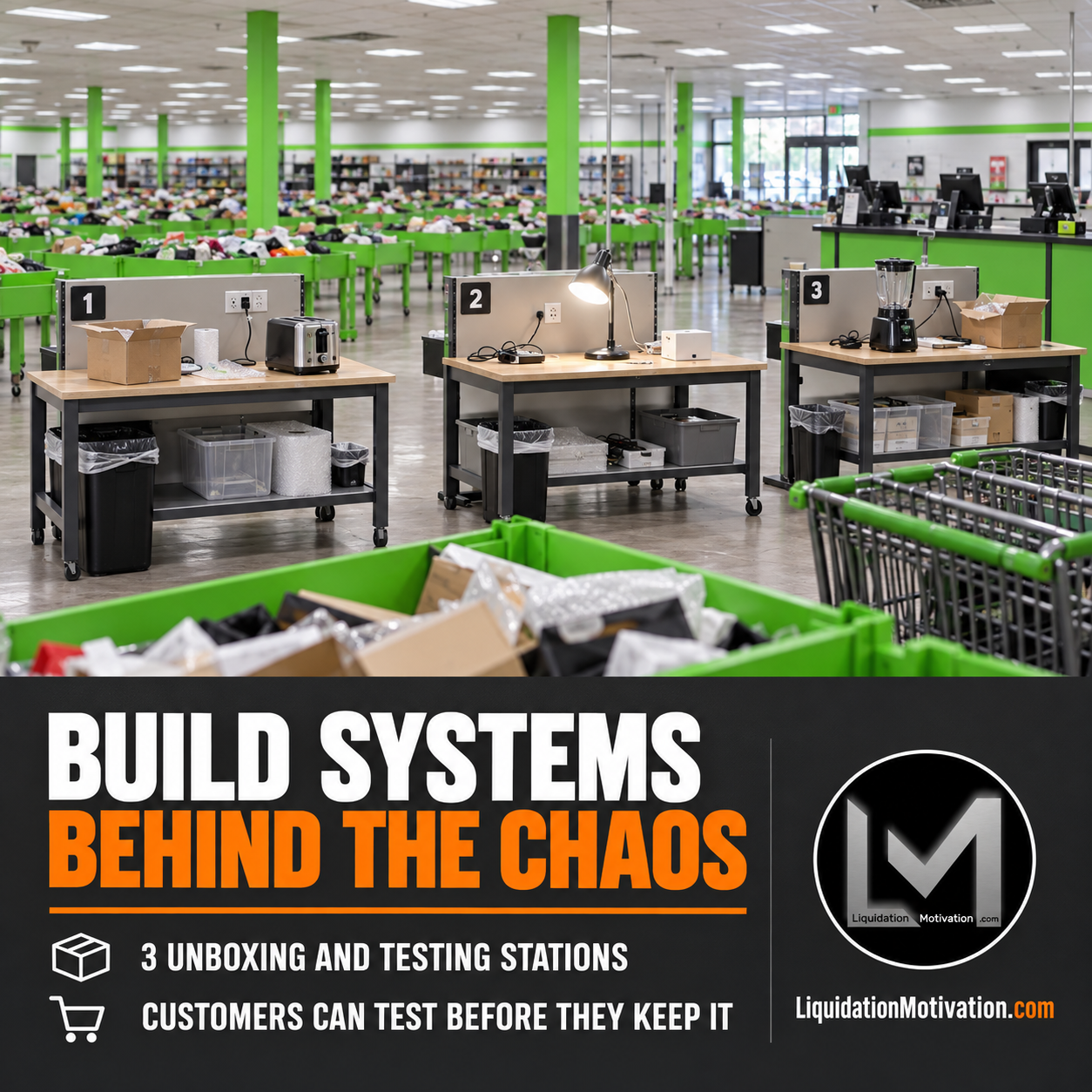
BinChasers added three unboxing stations with electricity so customers could open and test products before deciding whether to keep them. The store also assigned staff to manage the mall entrance and prevent shopping carts from being taken into common areas.
Those details matter when hundreds of customers arrive at once. A busy opening can quickly become a customer-service problem if shoppers cannot test products, return unwanted items, find carts, or move through the building safely.
The BinChasers re-grand opening worked because the move, marketing, inventory, departments, and staff preparation all supported the same goal. If you are considering a larger store, start by calculating how many loads you need every week, which products belong in each sales channel, and how you will handle slow, damaged, oversized, or incomplete inventory.
Do not expand just because more space is available. Expand when your supply chain and operating systems can support it.
Watch the full BinChasers re-grand opening video on Liquidation Motivation and study the move before you commit to more space.
Now go out there and make some money.
Frequently Asked Questions
1. What happened during the BinChasers re-grand opening?
BinChasers moved into a larger location at Lakeland Square Mall, expanding from 86,000 square feet to 110,000 square feet. The store reopened after being closed for only one day.
2. Why did BinChasers move to a new location?
The company’s previous space was taken over by a gym. BinChasers found another location on the opposite side of the mall, allowing the team to move without relocating far from its existing customer base.
3. How many bins does the new BinChasers location have?
The previous store had approximately 200 bins. The new location is planned to hold up to 250 bins, creating a larger inventory and shopping area.
4. How much inventory was available during the reopening?
BinChasers placed approximately $60,000 worth of merchandise and more than 50,000 items into the bins for the re-grand opening.
5. What was the opening-day price at BinChasers?
Opening-day pricing was $12 for everything in the bins, regardless of the item’s original retail value.
6. What promotions were offered during the re-grand opening?
The event included a $1,000 cash giveaway, approximately 50 additional prizes, iPads, laptops, a live band, and special opening-day deals.
7. How many people attended the BinChasers re-grand opening?
Tom estimated that between 600 and 800 people attended, with the crowd possibly reaching close to 1,000 shoppers throughout the event.
8. What new departments were added to the larger store?
The larger location added a furniture department, a weekly live auction house, and the Rarest Exchange, a collectible marketplace with rental booths and rotating trade shows.
9. What is the purpose of the BinChasers auction house?
The auction house provides another way to sell excess furniture, damaged merchandise, premium products, and items that may not perform well in the bins. The Lake Wales auction operation was generating approximately $10,000 to $15,000 in weekly sales.
10. What can other bin store owners learn from the BinChasers expansion?
A larger store requires a dependable inventory supply, additional truckloads, proper staffing, and multiple sales channels. Before expanding, operators should confirm they can consistently fill the bins and create a plan for furniture, damaged products, oversized items, and slow-moving inventory.
