Bad Loads & Tight Markets in Liquidation
Bad Loads, Tight Markets, and Why You Better Know What You’re Buying
The market is tight, the loads are weird, and if you’re running a bin store right now, you better know exactly what is landing at your dock.
Guys, we’re talking about a 12,600 sq ft plaza, a 6,300 sq ft bin store buildout, 32 LED lights saving $3,200, a 200-bin store, and one bad buying week that can put $30,000 on the line.
That is liquidation.
One week you’re helping a guy build out his fifth bin store.
Next week you’re staring at a truckload of clothing, knockdown furniture, and mystery boxes thinking, “How the heck am I supposed to put this in my bins?”
This business is not cute.
It is not easy.
And if you don’t know your loads, your costs, your exits, and your buyers, you are going to get punched in the mouth.
The Market Is Tight Right Now
For months, the good LPN and FC loads were coming in steady.
Then boom.
They slow down.
They disappear.
Now everybody starts reaching.
You start buying outside your comfort zone.
You start looking at DHL-style loads, Temu-style loads, 3PL returns, unclaimed mail, Walmart.com returns, clothing, furniture, and whatever else somebody is promising is “high piece count.”
And that is where people get hurt.
Because when you buy something you don’t really know, you are gambling.
Maybe you win.
Maybe you get smoked.
And in this business, getting smoked is expensive.
You don’t lose $200.
You lose $10,000, $15,000, $30,000 fast.
That is why I tell you guys all the time: stick with what you know, buy the loads that work, and do not give up good inventory when you find it.
A Good Load Saves You. A Bad Load Traps You.
Let’s look at the difference.
Rick down in South Texas is building out another bin store. He already has four. This will be his fifth.
He’s got a big plaza.
Half of it is around 6,300 sq ft.
He needs lights.
So we’re sending him a pallet of 32 drop ceiling LED fixtures.
That saves him $3,200.
That is real value.
That is the kind of liquidation deal that helps somebody open faster, save money, and keep building.
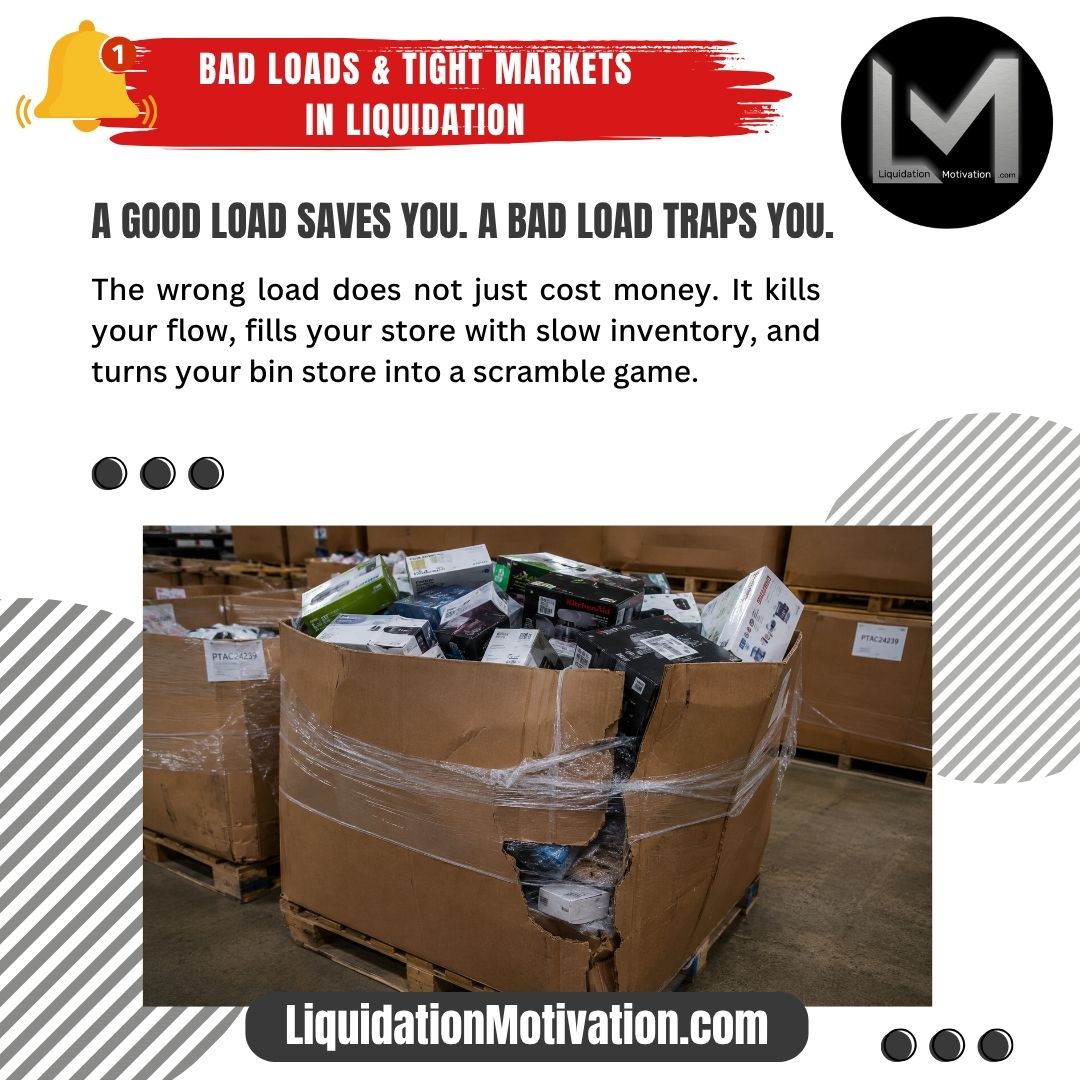
Now compare that to a bad truckload.
You think you’re buying unclaimed mail or high piece count.
But it lands and it’s a bunch of clothing, oversized boxes, cheap online returns, or furniture you don’t even want.
Now you have a problem.
Because bin stores need volume.
They need fast-moving inventory.
They need piece count.
They need stuff customers can dig through and buy.
If you’re opening every box only to find baby shoes, random shorts, or knockdown furniture, you are not running a smooth bin store.
You are playing the scramble game.
And guys, avoid the scramble game.
The Bin Store Rule: Fill Your Freaking Bins
I don’t care how pretty your store is.
I don’t care how many lights you put in.
I don’t care how clean your logo looks.
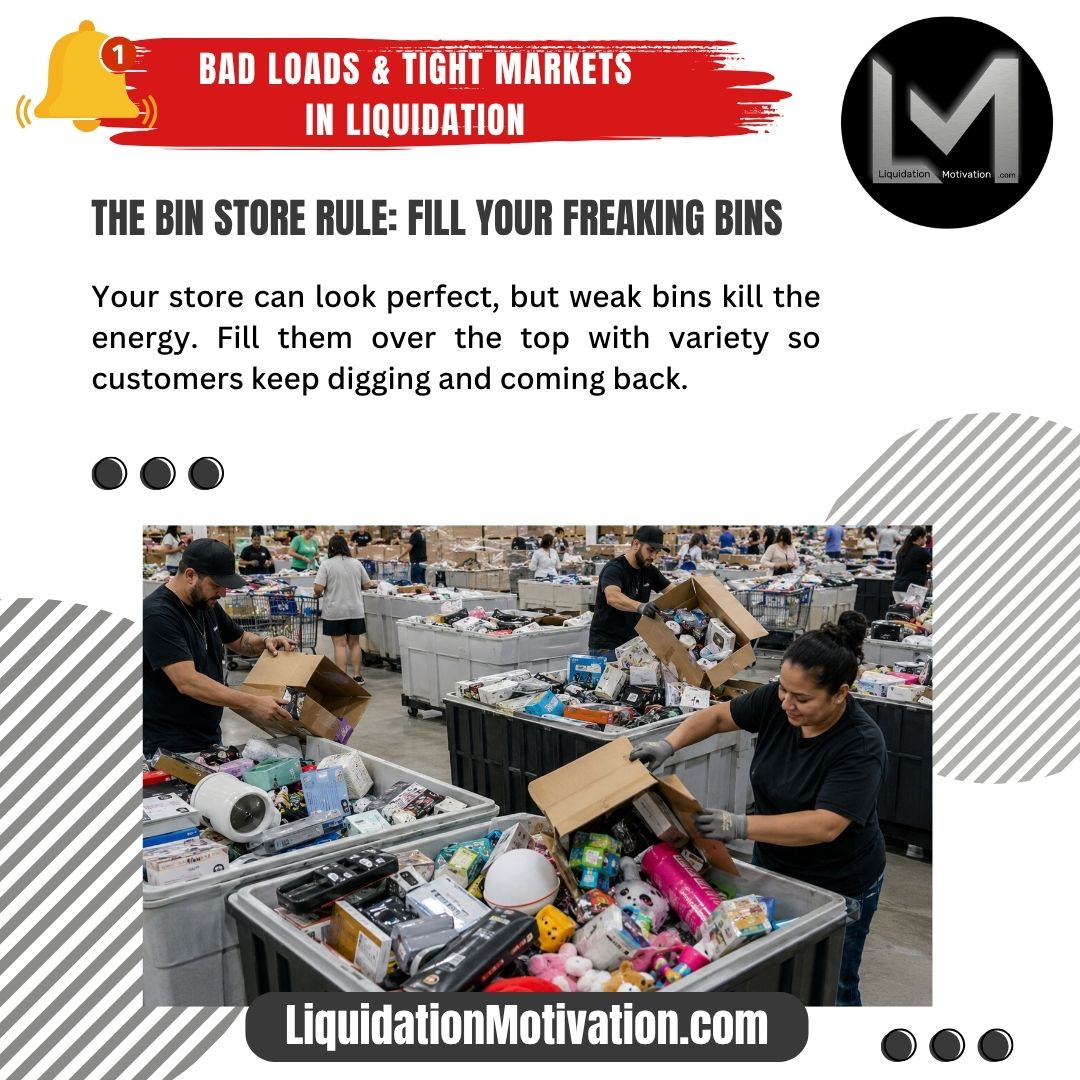
If the bins look weak, customers feel it.
You have to fill your freaking bins.
Not halfway.
Not “kind of okay.”
Over the top.
Customers want the treasure hunt.
They want to dig.
They want to feel like there is something in there.
That is why low piece count loads can kill you.
Furniture does not fill bins.
Big boxes do not fill bins.
Random knockdown furniture does not create that bin store energy.
Small goods, tools, electronics, household items, clothing that is priced right, and real variety — that’s what keeps people digging.
How to Not Get Screwed Buying Loads
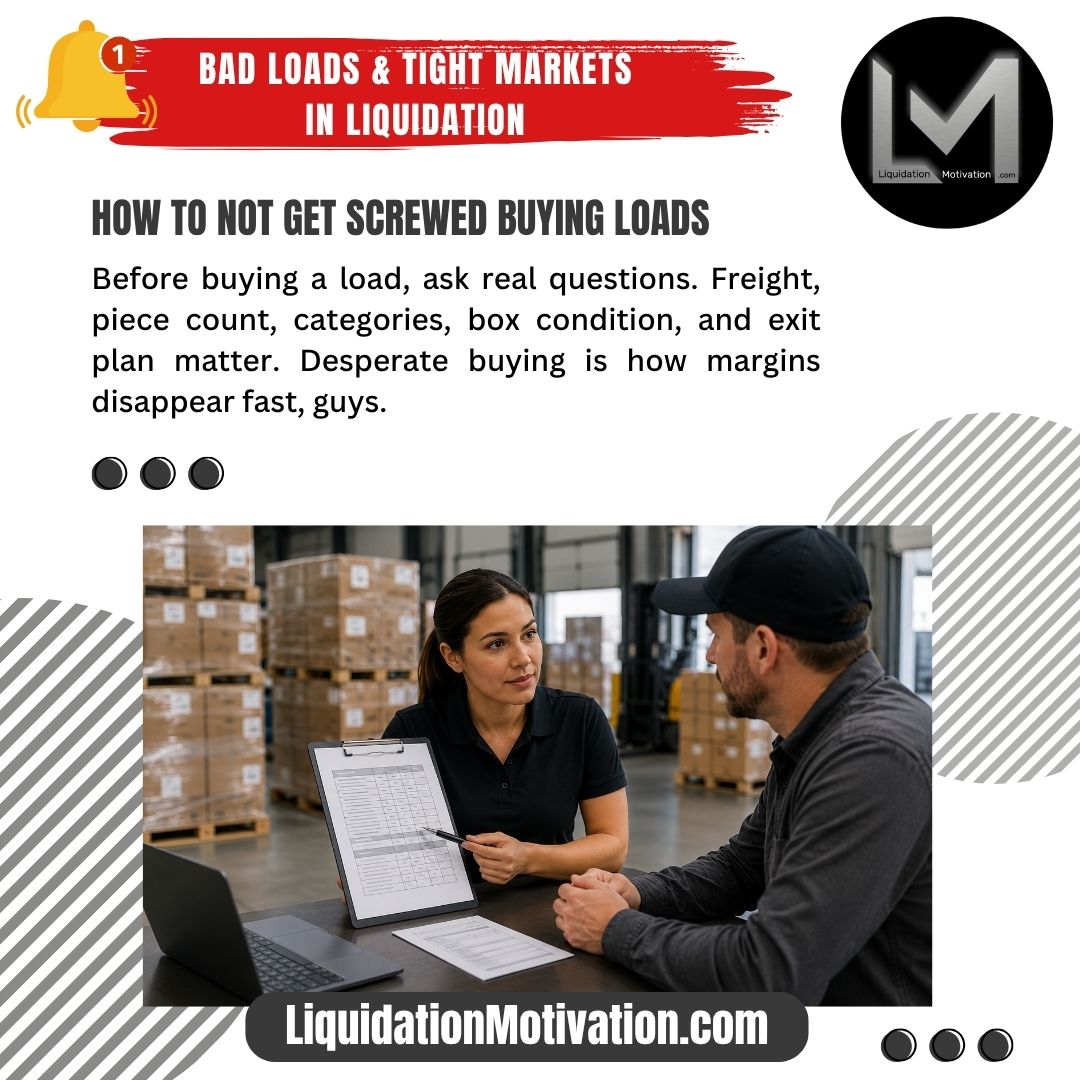
Before you buy, ask better questions.
Do not get emotional.
Do not buy because you are desperate.
Do not buy because the market is tight and you need “something.”
That is how you lose money.
Ask the vendor:
Where is the load shipping from?
Freight can destroy your margin.
Is this untouched, processed, or sorted?
Processed is not always bad, but it better be priced correctly and disclosed clearly.
What is the actual piece count range?
Not “high piece count.” Give me numbers.
How many pallets are smalls vs mediums vs oversized?
If you need bin inventory, you cannot get stuck with 23 pallets of big furniture.
What categories are inside?
Tools, clothing, furniture, general merchandise, returns, unclaimed mail, shelf pulls — it matters.
Are there current photos of the actual load?
Not sample photos from six months ago.
Are the boxes mostly sealed, open box, or loose?
That changes labor.
What is the expected exit?
Bin store? Auction? Pallet sale? Whatnot? Marketplace? Wholesale lot?
If the vendor cannot answer basic questions, slow down.
Guys, save your damn money.
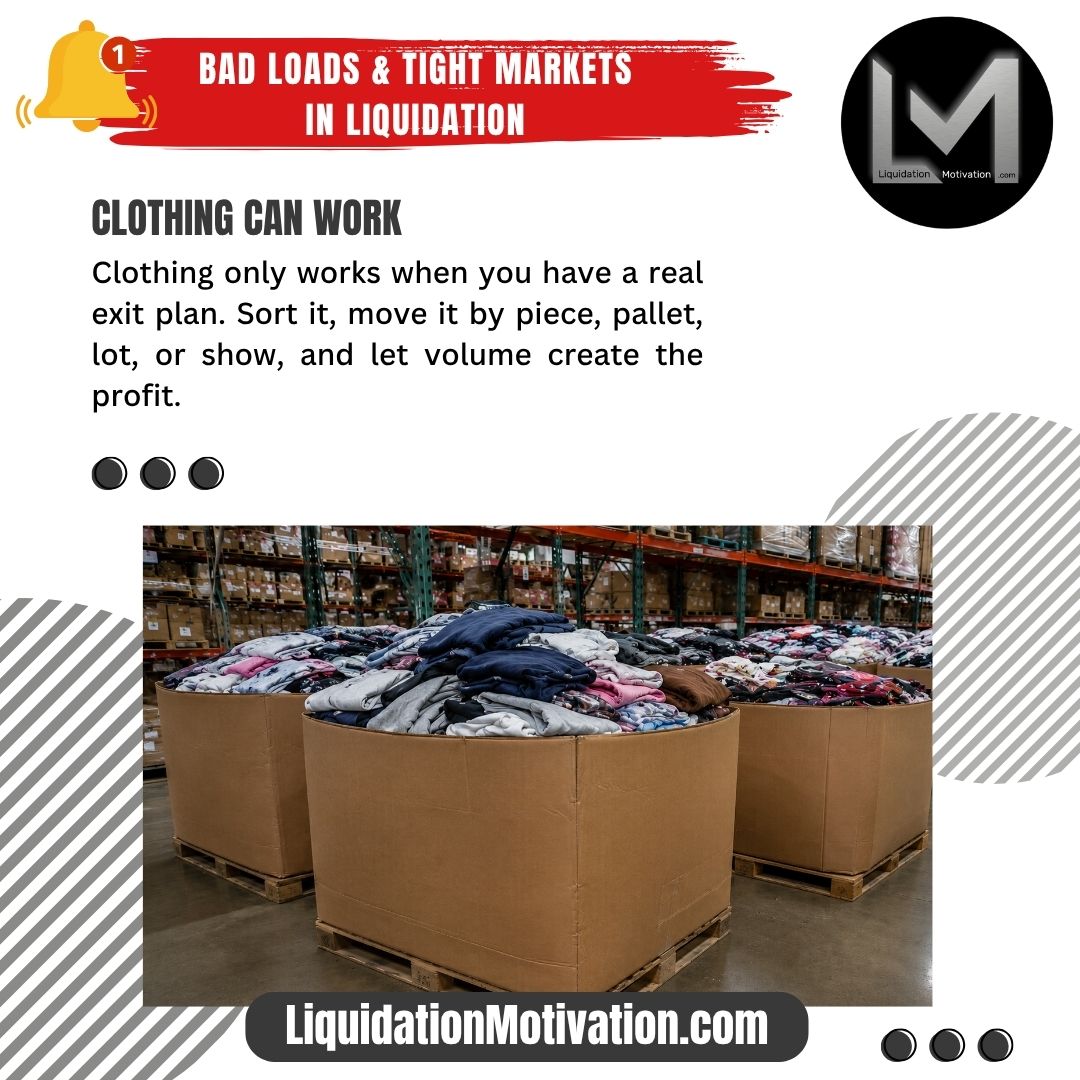
Clothing Can Work — But Only If You Have the Exit
I used to not love clothing.
But clothing can work when the numbers make sense.
If you have 60,000 pieces, 180,000 pieces, 18,000 pieces, or 38,000 pieces, you are not thinking like a normal reseller.
You are thinking wholesale.
You need buyers.
You need lots.
You need categories.
You need someone who wants gothic clothing, patriotic clothing, plus-size women’s clothing, new-with-tags clothing, or whatever niche you have.
You cannot just stare at it and hope.
Post it.
Run Whatnot shows.
Sell by the piece.
Sell by the pallet.
Sell by the lot.
Make 5 cents, 10 cents, 25 cents a piece if the volume is there.
Again, volume over value.
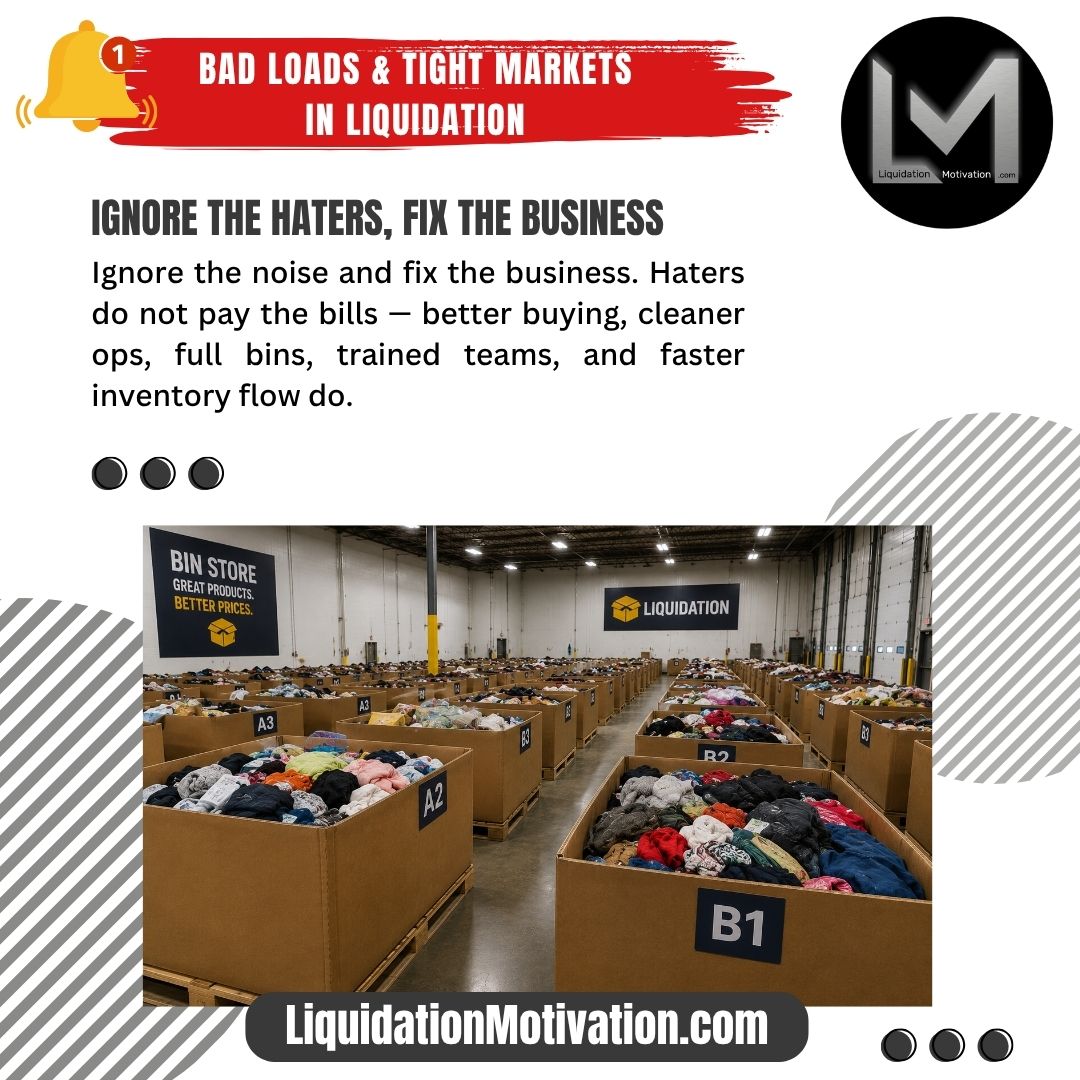
Ignore the Haters, Fix the Business
Every successful business gets haters.
Bin stores get accused of pulling good stuff.
Warehouses get accused of processing pallets.
People online say wild things because they have too much time and no business to run.
Do not build your day around those people.
Do not allocate one second of serious energy to them.
Your job is simple:
Buy better.
Price better.
Train your team.
Move faster.
Keep the floor full.
Keep the warehouse clean.
Keep the inventory flowing.
If employees are walking around like they’re on vacation, fix it.
If loads are coming in wrong, fix it.
If your bins look weak, fix it.
If your buying is getting sloppy, fix it.
That is the game.
The Big Lesson
The liquidation market changes.
Good loads come and go.
LPN dries up.
FC slows down.
Temu looks good one week and crushes you the next.
Home Depot Turbo loads start popping.
Target loads surprise you with crazy displays.
Clothing becomes a bigger opportunity than you thought.
That is why you need multiple exits.
Bin store.
Auction.
Wholesale.
Whatnot.
Marketplace.
Pallet buyers.
Truckload buyers.
Do not build a business that only works when one type of load is available.
That is fragile.
Build a business that can pivot.
But don’t confuse pivoting with panic buying.
That is where guys get wrecked.
Final Word
This business is hard right now.
The market is tight.
Good inventory matters.
Bad loads hurt.
Labor matters.
Piece count matters.
Vendor questions matter.
And if you want to survive, you better stop guessing and start operating like a real liquidation business.
Fill your freaking bins.
Avoid the scramble game.
Save your damn money.
Volume over value.
And when you need real liquidation knowledge, real operator talk, and real business lessons from the warehouse floor, go to:
Now go out there and make some money.
home | blog
