We Took Over Vegas ASD 2026 | Liquidation Motivation
We Took Over Vegas ASD 2026
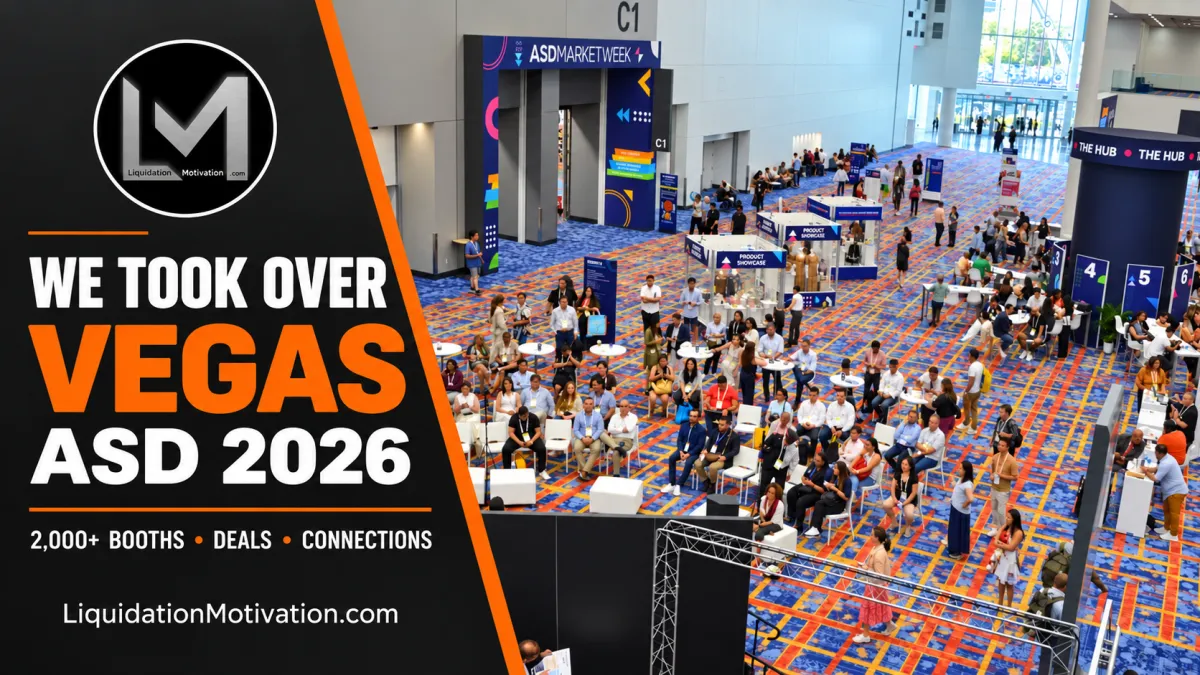
ASD 2026 in Las Vegas brought more than 2,000 booths together under one roof. Guys, that means retailers, wholesalers, liquidators, pallet sellers, truckload suppliers, and product vendors were all in the same place looking for business. If you are in liquidation and skip a show like this, you are choosing to buy from a distance while other operators are standing in front of suppliers, asking questions, and making deals.
This is not just a trade show. It is a sourcing event, a relationship event, and a chance to see where the industry is going before the change shows up in your own warehouse.
ASD Is Where the Real Conversations Happen
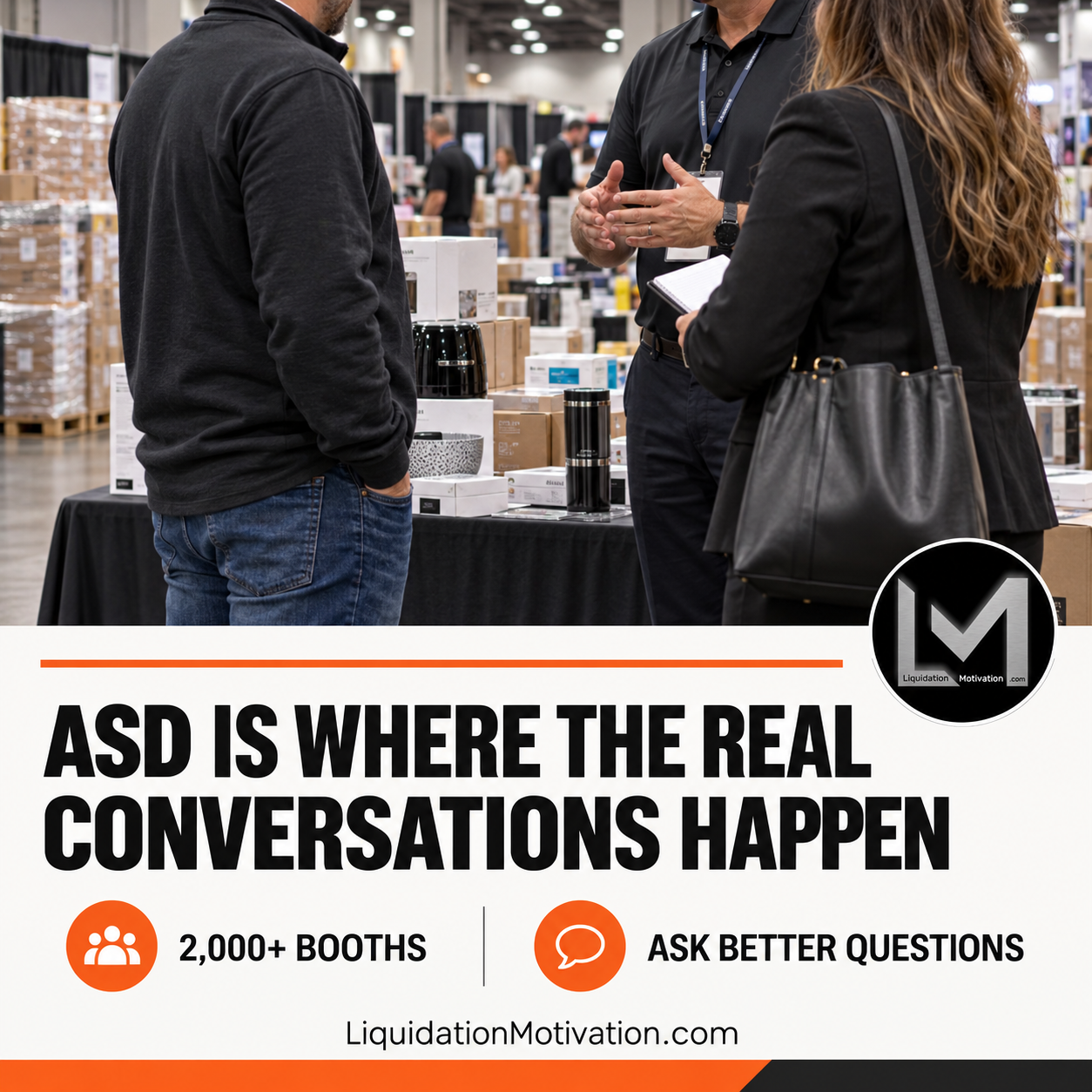
ASD takes place in Las Vegas twice a year. Tom says he makes more deals during a few days at the show than he does during the rest of the year. Your results may be different, but the reason these shows matter is straightforward: inventory changes, supplier relationships matter, and many opportunities never appear clearly on a website.
At the show, you can ask what is available now, what is coming next, what type of merchandise a supplier handles, and whether the product fits your business. You can also meet people who already bought from that supplier and learn what the experience was really like.
That information can save you from buying the wrong load because a product photo looked good online.

The Meetup Is Part of the Business
The Liquidation Motivation and TikTok Shop meetup had 275 people signed up. More than $10,000 in prizes were announced, and the total giveaway value later reached approximately $12,500 through gift cards, advertising packages, and other prizes.
The money was not the most important part. The room gave buyers access to other liquidators, live sellers, suppliers, and TikTok representatives. People were able to ask questions, exchange contacts, and find out who could help with clothing, health and beauty products, general merchandise, pallets, and truckloads.
You do not have to make money from every introduction. Sometimes the value is finding the person who can solve a problem six months from now.
If you stay in your hotel room while everyone else is meeting suppliers, you are giving away opportunities for free.
Selling Platforms Can Change the Math
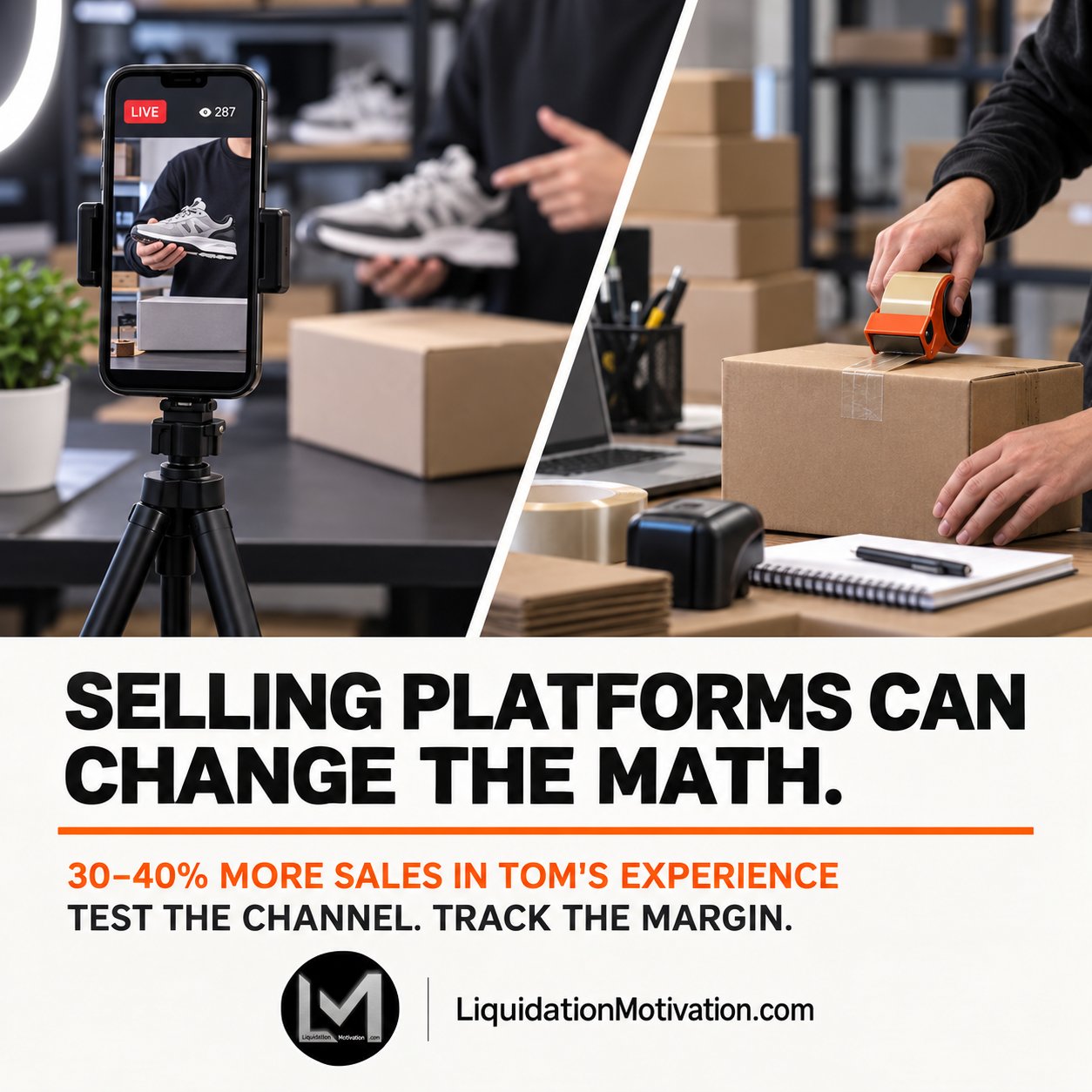
Tom shared one of the clearest examples of how fast the industry is changing. He had built an audience of approximately 50,000 followers on Whatnot. After signing up with TikTok about six months earlier, he said his TikTok sales were 30% to 40% higher than his Whatnot sales.
That is Tom’s experience, not a guarantee for every seller. The important lesson is to test the channel instead of assuming the platform you started with will always be the best one.
Compare the audience, selling fees, product fit, shipping requirements, time spent live, and labor needed after the sale. Cosmetics, lightweight merchandise, and products that bundle easily may work differently from furniture, oversized goods, or high-value items that require more explanation.
A higher sales number means nothing if the fees and labor consume the difference.
Buy Merchandise That Fits the Channel
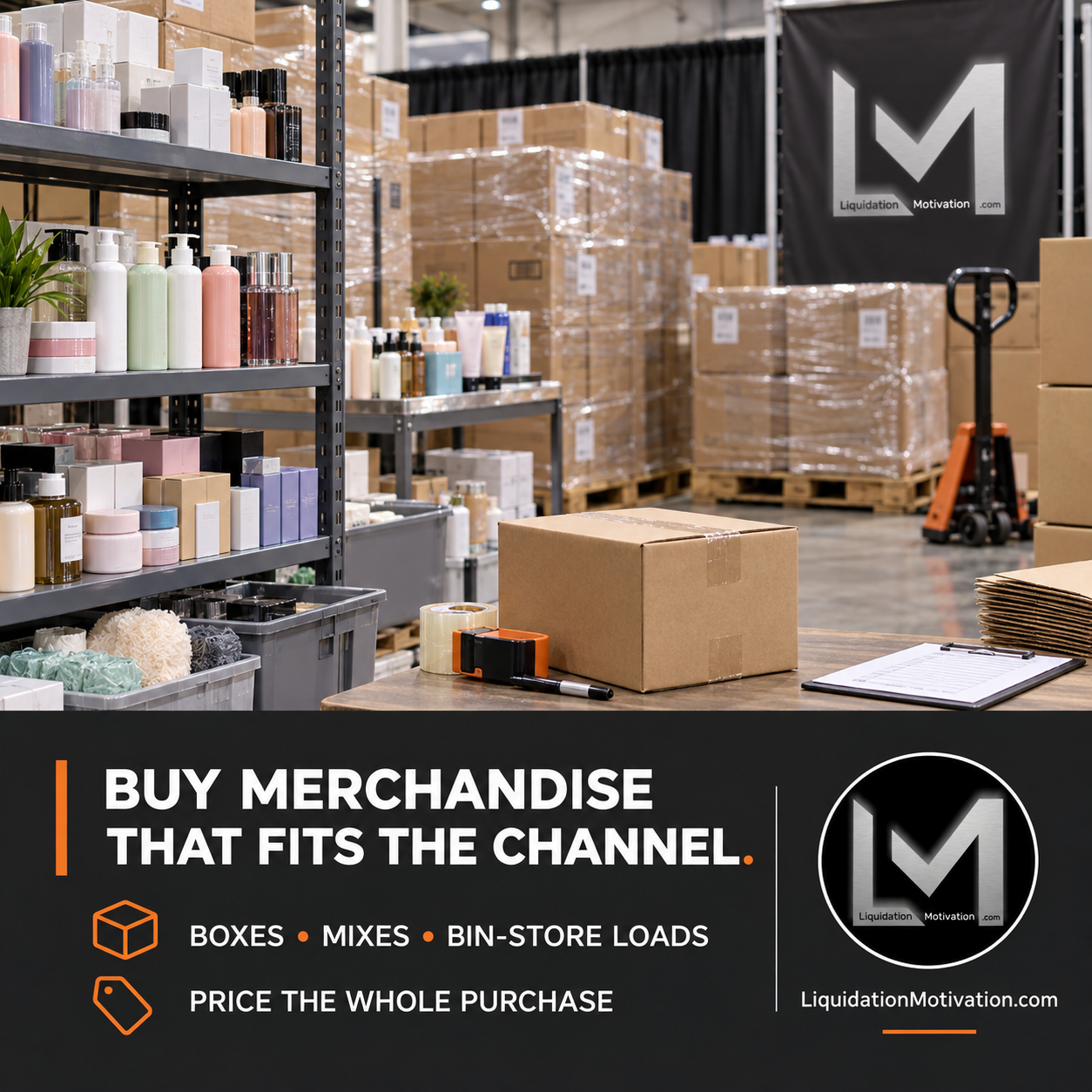
At the Discount Wholesalers booth, the conversation covered truckloads from major retailers, cosmetics, box-level purchases, 5,000-piece and 10,000-piece mixes, and loads prepared specifically for bin stores.
Cosmetics were described as attractive for live selling because they are lightweight, easy to ship, and simple to bundle. But a low unit price can still create a large cash requirement. One example discussed was 100,000 pieces at 60 cents each—a $60,000 purchase.
That is why operators need to calculate the full purchase, not just the price per piece. Before buying, ask where the merchandise came from, whether the products are authentic, what condition they are in, how much is damaged or incomplete, and what selling channel fits the category.
Do not buy 100,000 pieces because 60 cents sounds cheap. Buy only if you know how you are going to move the inventory.
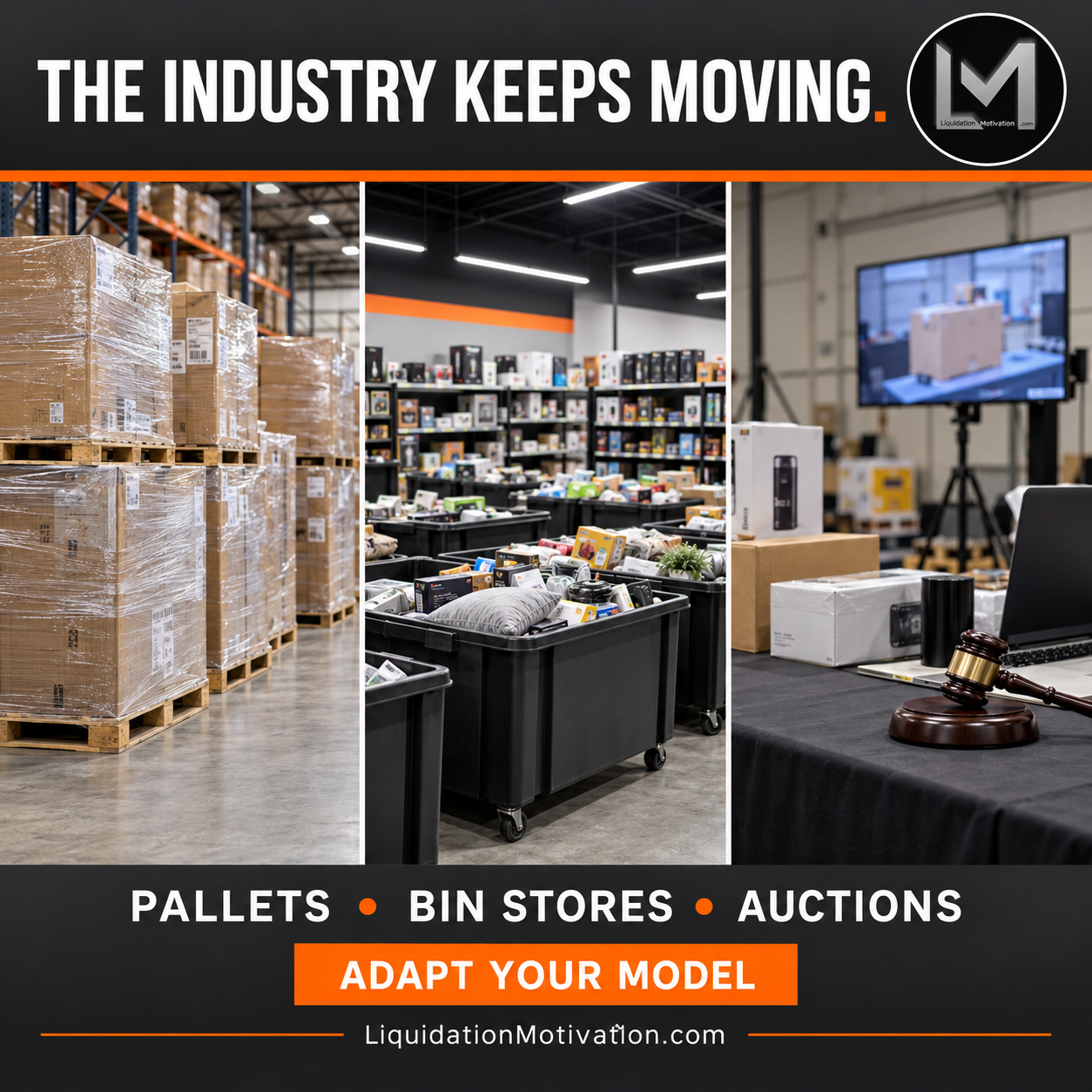
The Industry Keeps Moving
The Midtown Liquidation team described the shift they have seen over the years. The market moved from pallet-focused businesses to bin stores and now toward auctions and live selling.
That change affects what suppliers need to offer and what buyers need to ask for. Midtown discussed handling products from sources such as Amazon, Home Depot, Lowe’s, Walmart, and Target, while also asking customers about their actual business model.
A bin store may need high piece counts. An auction house may need larger items. A live seller may want smaller products that are easy to demonstrate and ship. The best load is not the one with the biggest claim. It is the one that matches your operation.
Do Not Confuse a Good Story With a Good Load
The vendors were also honest about the downside of liquidation. You will receive broken merchandise. You will open an expensive-looking box and find a used or incomplete product. You may get damaged items that require labor just to sort and remove.
You may also find something unexpected, like the real 14-karat gold chain discovered in a mystery box. That is part of the excitement, but it is not a buying strategy.
Build your numbers around realistic recovery, damage, labor, fees, and slow inventory. Treat the gold chain as a surprise—not as the reason the load works. Save your damn money by making the ordinary merchandise profitable.
Relationships Become Part of the Brand
The Midtown team also showed how relationships continue beyond the booth. They release new shirts for each ASD show, and customers still wear designs from previous years. Tom’s daughter had collected seven shirts from seven shows.
That is simple branding, but it works because people remember the experience. Suppliers who communicate clearly, answer questions honestly, and support buyers after the sale are more likely to earn repeat business than someone who only talks when they want payment.
The next ASD show should already be on your calendar. Come prepared with questions about source, condition, piece count, freight, pricing, and the best channel for the merchandise.
Watch the full ASD 2026 coverage from Liquidation Motivation, then use the lessons from the show to improve your next purchase and your next selling channel.
Now go out there and make some money.
Frequently Asked Questions
1. What is ASD 2026?
ASD 2026 is a major trade show in Las Vegas that brings together retailers, wholesalers, liquidators, pallet sellers, truckload suppliers, and product vendors.
2. How many booths were featured at ASD 2026?
The show featured more than 2,000 booths, giving buyers access to a wide range of merchandise and suppliers in one location.
3. How often does ASD take place?
ASD takes place twice a year in Las Vegas, giving operators regular opportunities to meet suppliers and discover new inventory sources.
4. Why should liquidation business owners attend ASD?
Attending ASD allows operators to ask suppliers direct questions, compare products, build relationships, and learn about new loads before making purchasing decisions.
5. What happened at the Liquidation Motivation and TikTok Shop meetup?
Approximately 275 people signed up for the meetup. The event included supplier introductions, networking, TikTok representatives, giveaways, gift cards, and advertising packages.
6. Did Tom see better results on TikTok or Whatnot?
Tom said he had approximately 50,000 followers on Whatnot but saw 30% to 40% more sales after starting on TikTok. He described this as his own business experience, not a guarantee for every seller.
7. What types of liquidation inventory were discussed at the show?
The suppliers discussed truckloads, pallets, box-level merchandise, cosmetics, clothing, health and beauty products, general merchandise, bin-store loads, and inventory for auctions or live selling.
8. Why are cosmetics attractive for live sellers?
Cosmetics are lightweight, easy to ship, and simple to bundle. However, sellers still need to verify product condition, authenticity, brand mix, and demand before purchasing large quantities.
9. What questions should buyers ask liquidation suppliers?
Buyers should ask where the merchandise came from, what condition it is in, how many pieces are included, whether the load fits their business model, and whether the products are better suited for bins, auctions, pallets, or live selling.
10. What is the biggest risk when buying liquidation inventory?
Liquidation loads can include broken, used, incomplete, or difficult-to-sell merchandise. While valuable surprises can happen, buyers should base their numbers on realistic recovery and account for damage, labor, fees, and slow-moving inventory.
